Prevent BEC & Impersonation
Your Inbox Looks Safe. It Isn't.
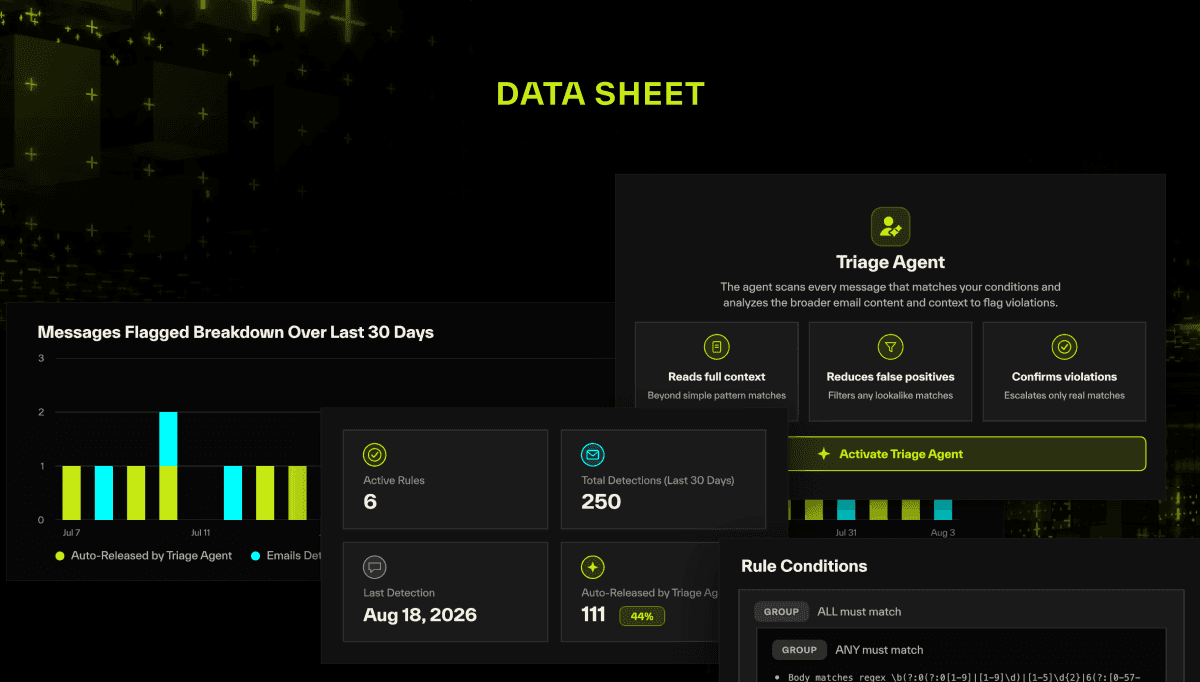
Your team stops 60 BEC attacks monthly that your gateway marks safe — deployed via API in 60 seconds, no MX changes.
More BEC attacks caught than your current tools find
Domino's customer story
SOC hours reclaimed annually through automated triage
Forrester Total Economic Impact Study
Single invoice fraud attack stopped at one customer
Valvoline customer story
The Challenge
Your Gateway Is Missing the Attacks That Cost the Most
Real Incident
BECBECcausedcaused$2.9$2.9billionbillionininreportedreportedU.S.U.S.losseslosseslastlastyearyear——moremorethanthanransomware,ransomware,malware,malware,andandcredentialcredentialthefttheftcombined.combined.
Based on a real customer incident
The Solution
An AI-Native Approach to Stopping Business Email Compromise
- Uses AI to model normal behavior based on thousands of identity attributes to detect impersonation.
- Leverages past communication and relationship patterns to detect behavioral anomalies, even if the email comes from a legitimate domain.
- Detects email content and tone patterns that are associated with invoice fraud and other BEC attacks.
Core Capabilities
How Abnormal Stops BEC
Over 25% of the Fortune 500 Trust Abnormal AI to Make Automated, Critical Security Decisions


.svg)













Customer Voice
Real Results from Security Teams
“Abnormal's automation gives our analysts time back to work on other projects, and the fact that it's API-based gives us flexibility to tie in other applications and their data.”

John Roeser
Senior Manager, Information Security, Domino's
“Our goals are to get away from being so reliant on human judgment and leverage AI to be proactive. Abnormal helps us with those goals.”

Corey Kaemming
Senior Director, Information Security, Valvoline
Abnormal powers over 4,500 customers, including over 25% of the Fortune 500.
FAQ
Related Resources


Stop the Attacks Your Gateway Can't See
Deploy in 60 seconds via API. No MX changes. See BEC attacks your current tools miss on day one.