
Key Insights
The Growing Challenge of Multi-Language Security Awareness Training
As organizations become more global, security awareness training is expected to work seamlessly across languages, regions, and cultures. Most platforms now offer some level of multi-language support, but delivering training that truly resonates with a global workforce remains a challenge.
Phishing continues to be one of the most common initial access vectors, and employees are far more likely to recognize threats when training reflects the language they use every day. When phishing simulations, coaching moments, or security communications feel translated rather than native, subtle warning signs are easier to miss and engagement drops.
Security teams already know language matters; the challenge is maintaining high-quality, relevant training across languages when manual translation slows delivery and adds operational overhead. Even programs that technically support multiple languages can feel generic, training employees on scenarios that do not match what they actually see in their inboxes. The result is training that appears comprehensive on paper but falls short in changing real-world behavior.
Moving From Translation to Adaptive Phishing Simulations
AI fundamentally changes what’s possible in multi-language security awareness training. Abnormal’s AI Phishing Coach moves beyond static translation and delivers adaptive experiences that respond to each employee in real time.
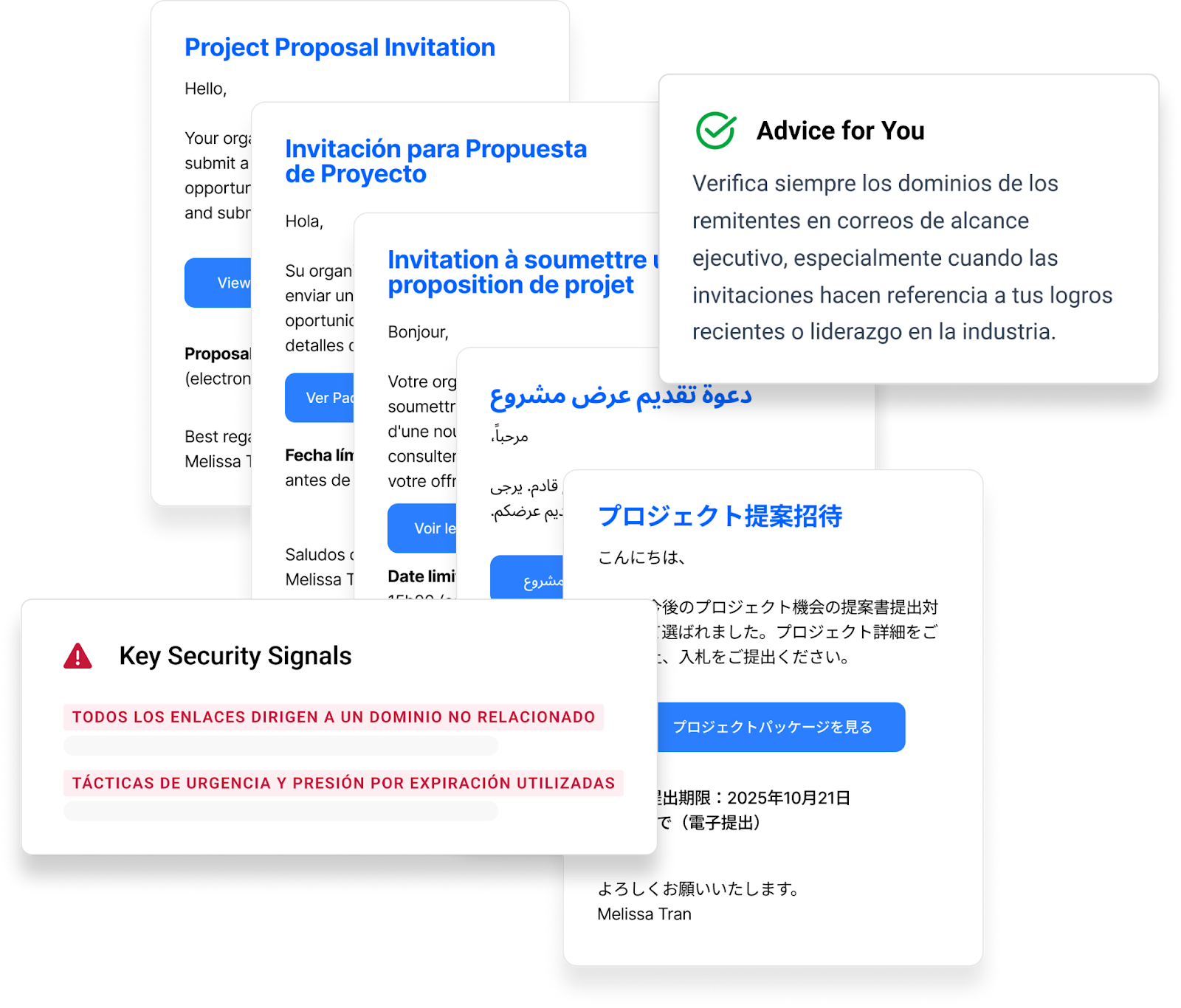
Abnormal automatically delivers phishing simulations, just-in-time coaching, and security communications in an employee’s preferred language by detecting language settings directly from Microsoft and Google user profiles. This adaptive approach ensures simulations arrive in the same language employees use every day, making them more immediately recognizable as realistic threats. Coaching and follow-up communications adjust just as seamlessly, reinforcing learning at the exact moment it matters.
Because this process is AI-driven, delivery and adaptation run continuously without manual intervention. As phishing tactics evolve, simulations and coaching adapt alongside them, without requiring security teams to manage translations or rebuild campaigns. Training becomes relevant, timely, and personal, regardless of where an employee is located.
Scaling Awareness With Multi-Language Video Training
Adaptation is just as critical when it comes to formal security training. Video-based education plays an important role in establishing baseline awareness, but producing high-quality training videos for a global workforce has historically been expensive and difficult to scale. Many organizations rely on subtitles or limit training to a small set of languages, which can reduce engagement and comprehension.
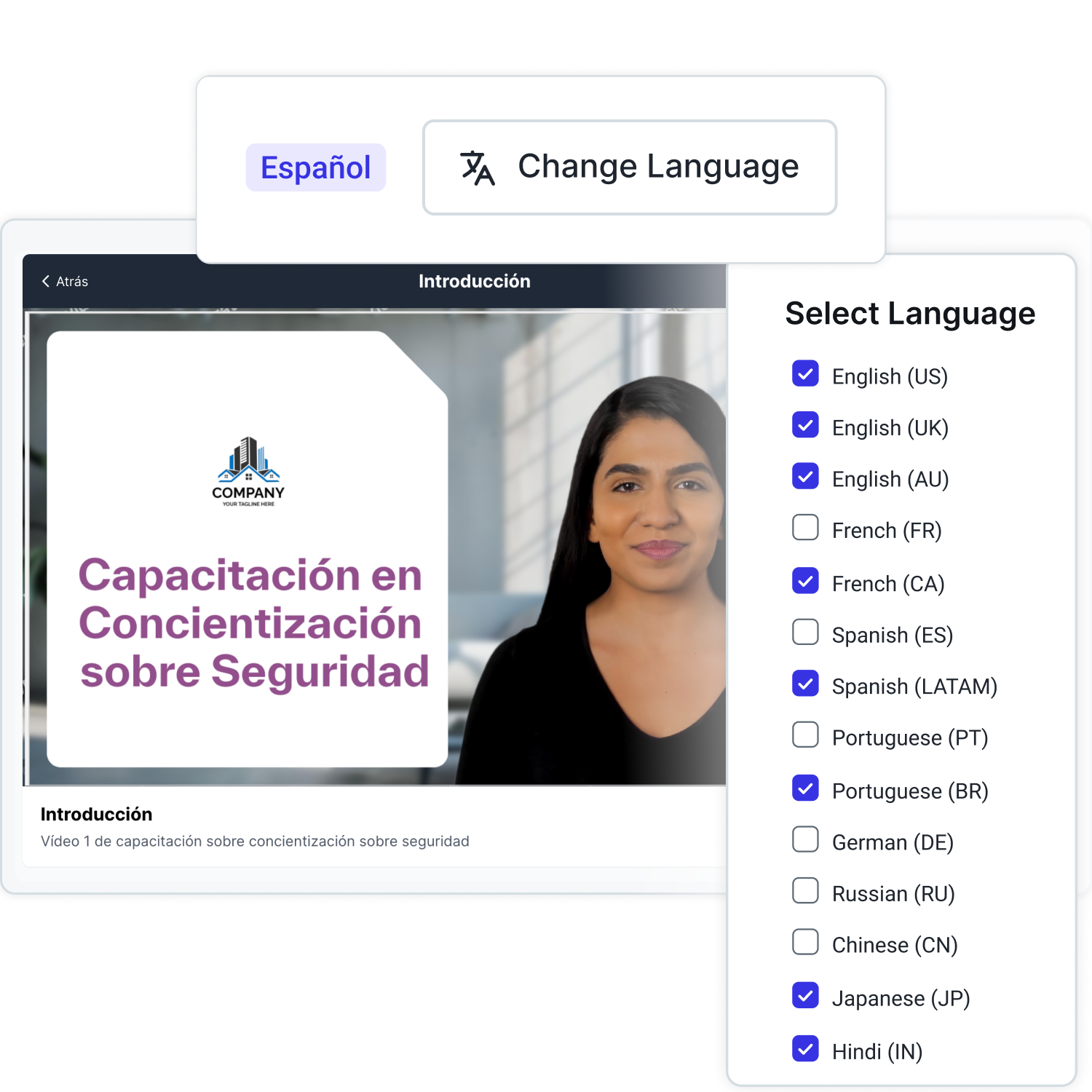
Abnormal addresses this challenge with AI-generated video training delivered in ten languages and regional dialects, including English, French, Spanish, Portuguese, German, Chinese, Russian, Hindi, Korean, and Japanese. These lessons deliver consistent messaging while respecting linguistic and regional nuances, allowing organizations to provide the same high-quality experience across geographies.
Because the videos are AI-generated, organizations can scale training globally without sacrificing speed, quality, or relevance. Employees receive content they can fully understand and apply, while security teams avoid the operational burden of managing separate training programs by region.
Building a Stronger Global Security Culture With AI
The impact of adaptive, multi-language training extends beyond basic accessibility. When employees clearly understand security guidance and experience realistic simulations that mirror real threats, they are more likely to engage, retain what they learn, and respond correctly.
This leads to stronger phishing resilience and a more consistent security culture across the organization. Teams can replace fragmented programs that vary by region or language with a unified approach to security awareness that scales with the business.
As global workforces continue to grow, security awareness programs must evolve with them. The future of security training is not about translating content once and hoping it works everywhere. It is about continuously adapting training to the people it is meant to protect, with the speed and consistency only AI-native systems can provide.
To explore how Abnormal delivers adaptive, multi-language security awareness training for global teams, schedule a personalized demo.
