
NOTE: Demo visuals include blurred data or synthetic placeholders to protect customer privacy.
Keeping Up Got Costly
Abnormal relies on roughly 50 SaaS vendors across core workflows. When incidents hit, the first signal often comes from an end user asking if something is broken. That forces IT into a loop of manual checks across vendor pages, security advisories, and scattered alerts, even when the information is already public.
Three frictions showed up in the demo and discussion:
- Too many places to check for uptime, component degradation, and vendor announcements.
- Security updates and critical vulnerabilities were hard to track consistently across vendors.
- Alerting was noisy or mismatched, so people subscribed broadly or not at all.
Centralizing Vendor Risk Signals
Ops-Dash is a self-hosted web app that aggregates SaaS vendor status and security signals into a central source of truth, then routes the right alerts to the right people. As Tyler put it, “This operational dashboard is intended to act as a central source of truth… and give you real-time awareness of these outages.”
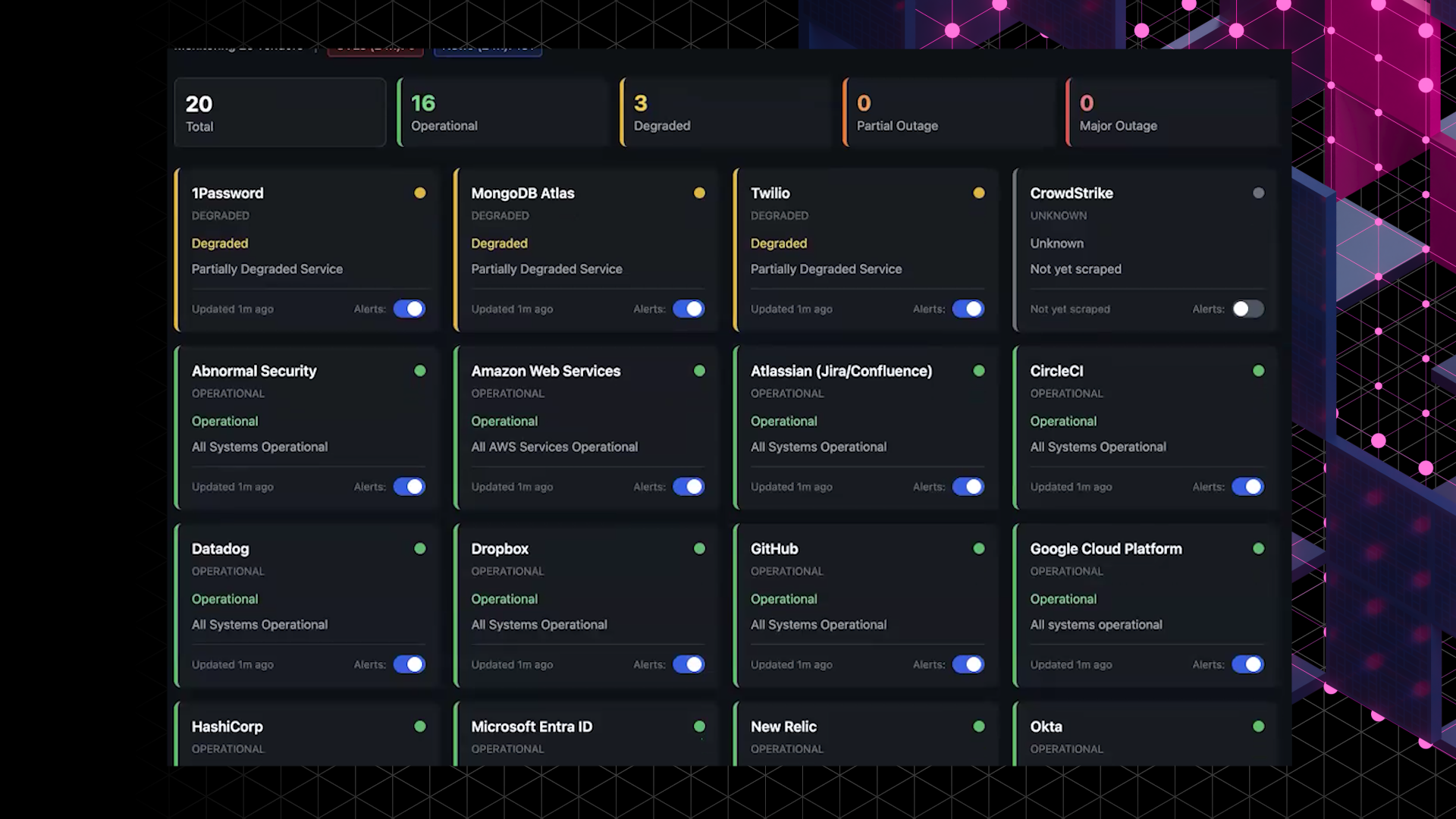
Key capabilities in the current build:
- Real-time vendor outage visibility across monitored services, including component-level tracking (not just “service up/down”).
- Coverage for 19 of 20 targeted vendors, with CrowdStrike excluded for now due to access restrictions.
- Security awareness in one view: critical vulnerabilities and security news alongside status signals.
- Okta SSO for access control and user management, backed by hardened AWS infrastructure patterns.
- Slack alerting via webhooks, plus individualized subscriptions.
- A new Glean-powered recommendation flow that suggests alerts based on a user’s role and profile context.
Ops-Dash is already “core complete” for the dashboard experience, with near-term work focused on completing user management flows, hardening HTTPS, and fully enabling the Slack alert system.
Fewer Pings, Faster Decisions
The immediate value is time and attention. Instead of waiting for end users to detect problems, IT can see issues early, understand the scope at the component level, and communicate quickly. And instead of everyone subscribing to everything, the recommendation system helps people start with alerts that match what they actually own.
What teams get out of it:
- IT and Ops: fewer reactive checks and fewer “is it down?” interruptions, so time shifts back to planned work.
- Business users: quicker, clearer updates when a core tool is degraded, reducing confusion and duplicate tickets.
- Security and risk stakeholders: a shared view of vendor incidents plus vulnerability context in the same place.
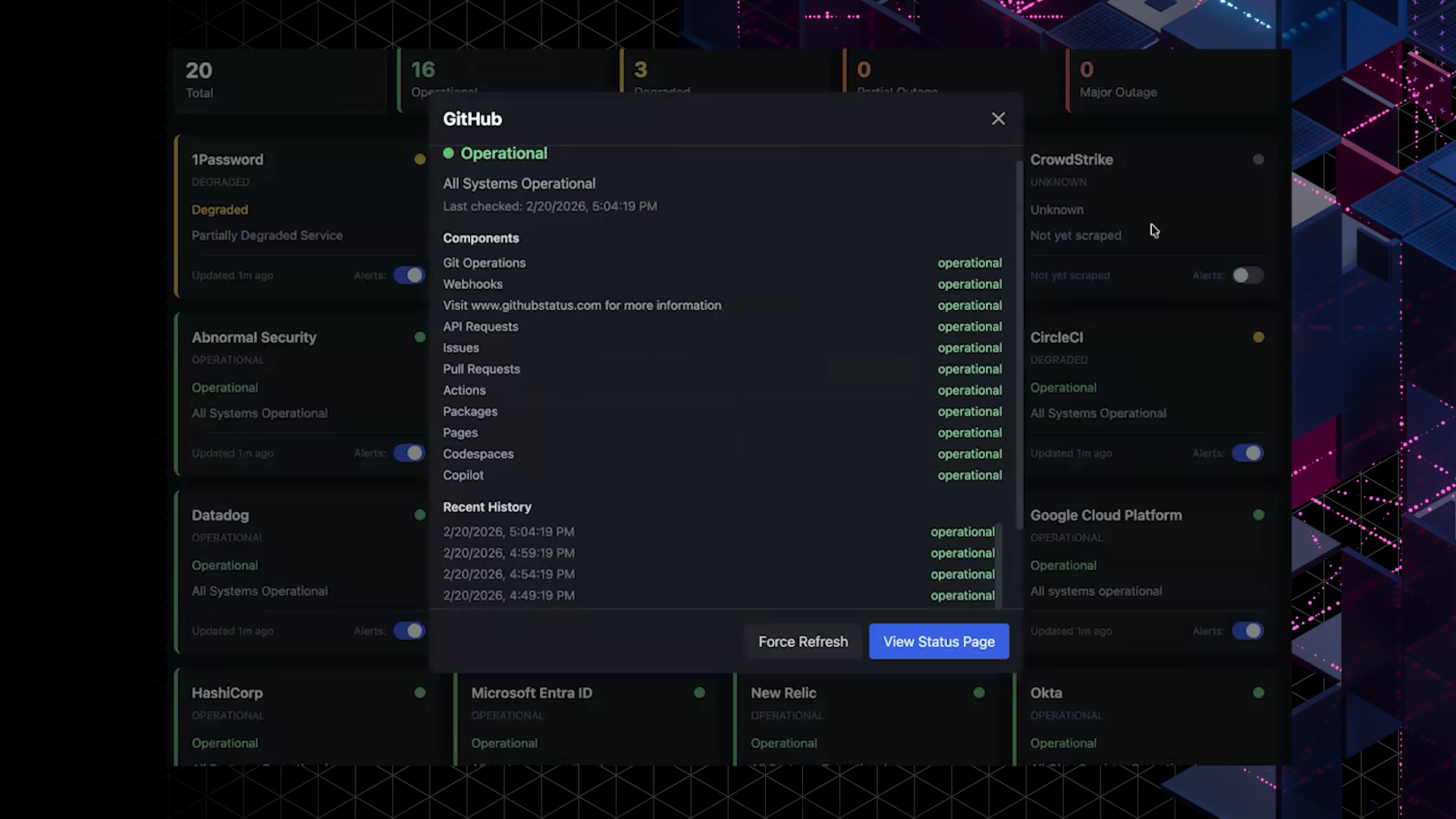
In the next phase, Tyler and Elvin aim to expand vendor coverage beyond the initial set and operationalize the Glean-based recommendations into a default onboarding path for new users, so alert subscriptions start right away without manual setup.
A Dashboard Ops Can Trust
Peers reflecting on past ops and IT leadership roles framed Ops-Dash as the missing layer between a growing SaaS stack and the people tasked with keeping it running. The core win is that it anticipates user questions and reduces the scramble caused by fragmented status and security signals.
That pattern matters culturally at Abnormal. Teams can build focused tools that cover the exact internal use case, ship quickly, and iterate as soon as the first version lands. Ops-Dash is already prompting “what else should we track?” conversations, and the next usage signal is clear: broaden access, tune role-based alert recommendations, and keep tightening the loop between incidents and communication.
