
NOTE: Demo visuals include blurred data or synthetic placeholders to protect customer privacy.
Tech Constitution, Shipped
As Abnormal pushes more design work into AI tools, the first failure mode is not effort. It is missing or inconsistent context. Design reviews used to start with humans gathering requirements, stakeholders, and patterns. Now, agents are expected to draft specs and propose system changes, but they often default to industry-standard patterns that do not align with Abnormal’s “happy path.”
Three frictions showed up repeatedly:
- Context fragmentation: security, legal, and architecture guidance lived across Confluence, Google Docs, and tribal knowledge.
- Context-window limits: even when guidance is available, agents cannot reliably load everything for each change.
- “Zombie rules”: ad hoc steering in tools could degrade results when documentation is inconsistent or lacks an overall loading architecture.
A Unified Markdown Constitution
Constitutional Markdown is a simple idea with a hard execution detail: standardize the organization’s rules and make them usable across the tools that do most code changes. As Shrivu put it, the goal was “to create Abnormal's tech constitution as a unified interface for… steering the design and architecture and best practices through all the coding agents that are working.”
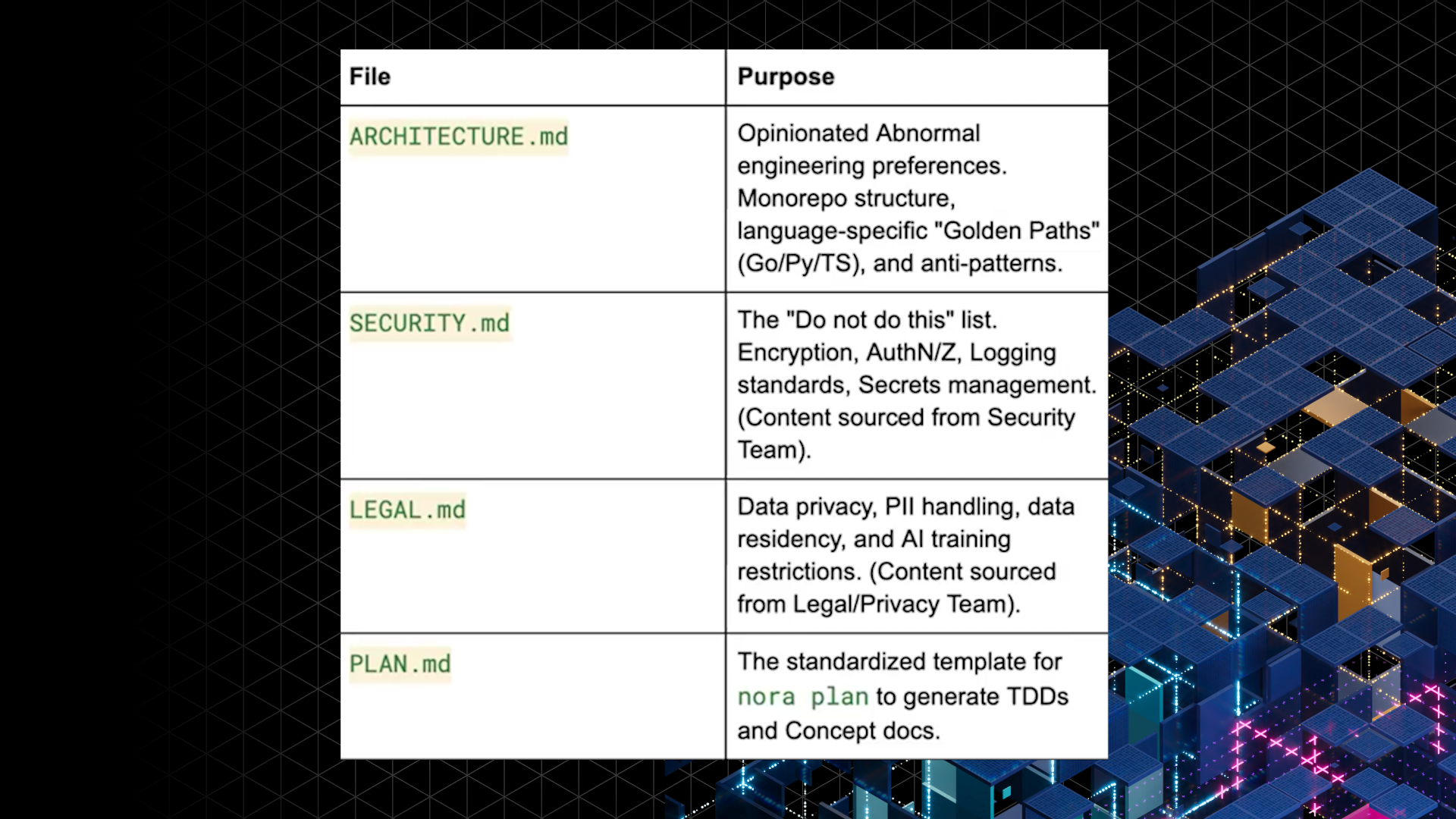
The approach centers on a small set of governing Markdown documents, authored in Abnormal’s voice and optimized for reuse:
- Architecture guidance: opinionated best practices for how Abnormal designs systems and when to choose specific patterns.
- Security guidance: security review inputs translated into principles that an AI can apply during design and implementation.
- Legal guidance: legal review considerations captured in a form that agents can check early, not late.
- Three-tier loading model: governing Markdown, standard Markdown consumed by tools, plus distributed supporting context.
A key addition is an update loop. Shrivu integrated Zoom-based design review sessions (TDD reviews) into an automated process, proposing new principles for the constitution.
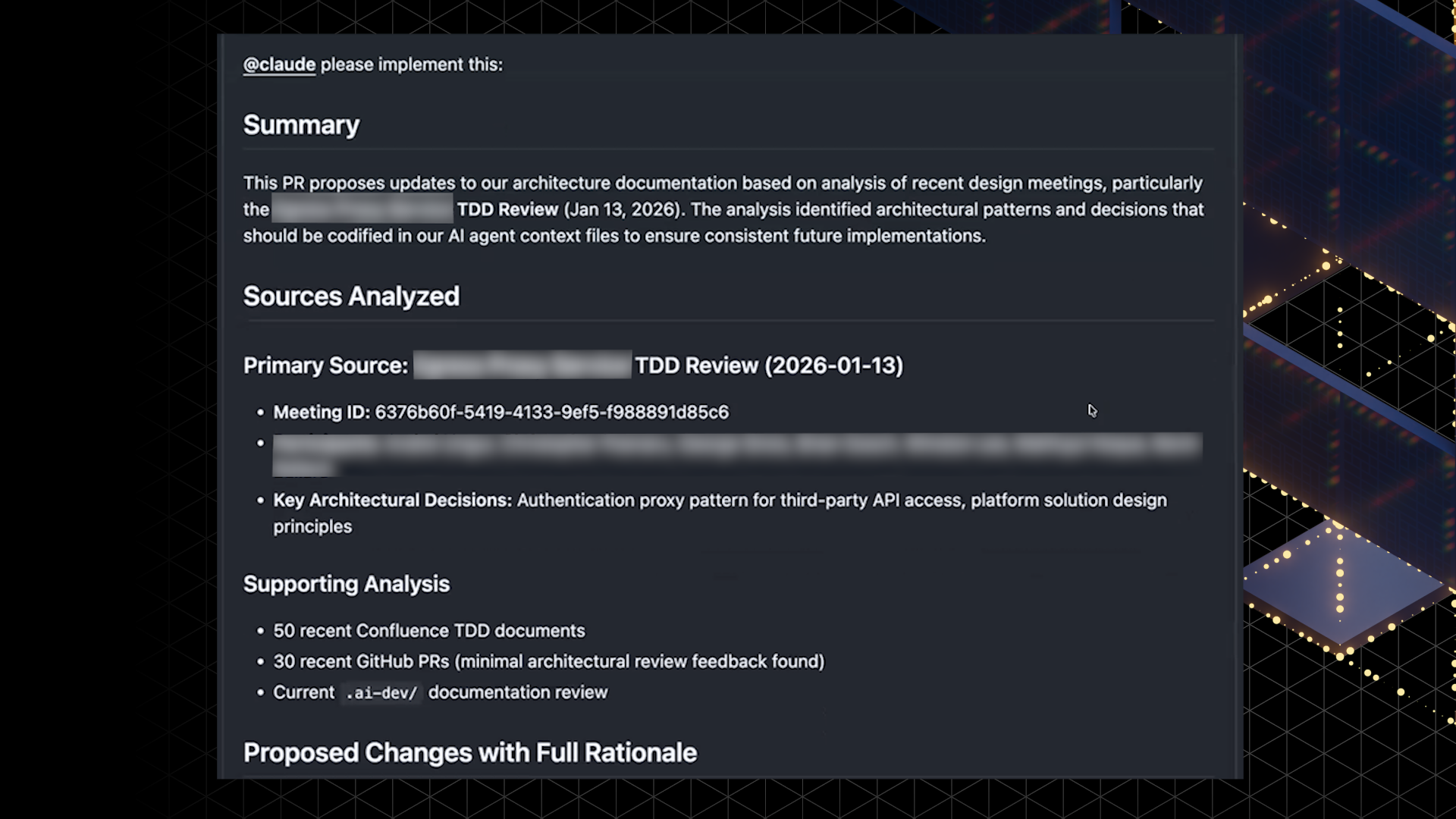
For example, after a recent review, the system suggested adding policy around third-party API authentication into SECURITY.md, grounded in what stakeholders actually debated.
What Changed for Builders
Constitutional Markdown improves the default quality of AI-initiated work by making Abnormal’s standards easier to find, load, and apply. It is not trying to encode every decision. It focuses on principles and the reasoning behind them, so future projects do not overfit to a single past design review.
Impact shows up for at least two audiences:
-
Engineers and architects: faster first drafts of specs and changes that align with Abnormal patterns, reducing back-and-forth in reviews.
-
Security and legal partners: earlier surfacing of review criteria to catch issues before implementation hardens.
Early signals are practical: the team has already merged at least one proposed update from TDD-derived suggestions, and the loop is positioned to keep the constitution current as decisions evolve. Next step: expand coverage by regularly routing more TDD review outputs into curated updates, so the constitution stays tight and actionable rather than sprawling.
Early User Adoption Signal
Peers describe this as a reliable “starting point” for agent-driven design work because it replaces scavenger hunts across docs with a single, versioned source of truth. The value is less about new rules and more about the consistent application of the rules Abnormal already has.
Culturally, it supports the shift to AI-initiated workflows without turning reviews into policing. The next usage signal to look for is wider team participation in curating constitution updates, especially from security and legal partners, so the guidance reflects real decisions as they are made.
