
NOTE: Demo visuals include blurred data or synthetic placeholders to protect customer privacy.
Agentic Developer Workspaces
Before Modal Dev Boxes, kicking off an agent session was possible, but it was slow and rigid. Engineers had to wait too long before seeing anything useful, and expanding what an agent could safely touch, like logs, a database, or UI checks, often meant complicated setup work or long delays.
Three frictions showed up repeatedly in the workflow:
- Long startup and feedback loops, especially the wait for “time to first code.”
- The environment setup was too complex to safely grant agents access to more internal systems.
- Competitors were moving faster by buying ready-made infrastructure, while Abnormal’s approach required more internal build and maintenance.
The result was predictable: developers still did many repetitive, click-heavy tasks manually, even when an agent could have handled them with the right tools and guardrails.
Browser-Based Secure Dev Boxes
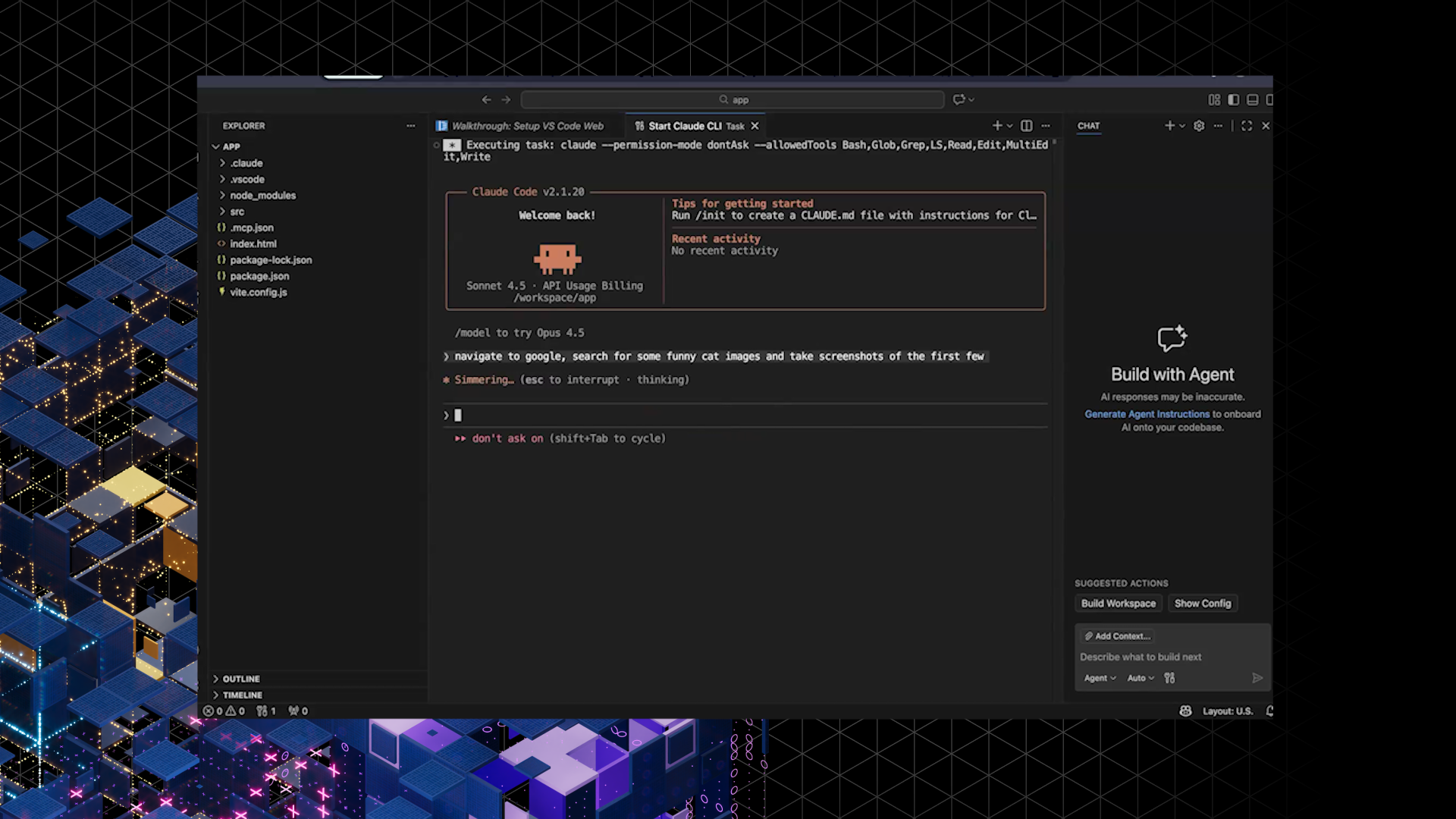
Modal Dev Boxes uses Modal to create an instant, sandboxed development environment that runs in the browser. It gives an AI agent a usable “computer” where it can navigate, run workflows, and gather evidence, while the developer can observe progress in real time.
Key capabilities in the current prototype include:
- Near-instant dev box startup, with faster warm starts on repeat sessions.
- A live, browser-based agent session where engineers can follow along as work happens.
- Real tool access (like Chrome) so agents can validate workflows the way humans do.
- Screenshot capture and traceability are useful for verifying UI changes and outcomes.
- Secure access controls designed to mirror the developer’s own permissions when connecting to internal resources.
In the demo, the agent used Chrome to search and collect results, but the engineering intent extends beyond that: the same pattern can apply to internal logs, databases, and other systems where validation matters. Shahzil’s early use case is infrastructure work, like provisioning gated AWS resources, where the agent can execute steps, show its work, and validate that components were created and connected correctly.
Faster Loops for Builders
The biggest win is cycle time. Shrivu Shankar (VP, AI Strategy) noted that workflows that previously took 10 minutes to 3 hours with the existing setup or GitHub Actions can be brought down to roughly one second in this model. That kind of speed changes which tasks are worth delegating, and how often engineers can iterate.
What that enables across teams:
- Platform and product engineers: less waiting, more iterations per day, and faster validation of UI and system changes.
- GenAI builders: a stronger foundation for more autonomous agents that can complete end-to-end tasks, not just suggest code.
- Security-minded stakeholders: a clearer path to least-privilege agent access by matching and enforcing developer-level permissions.
Next step: expand internal connectors (logs, databases, and deployment tooling) with policy controls and auditing to enable agents to safely handle higher-impact workflows, such as AWS provisioning and cross-service validation.
Agents Need Real Computers
Shrivu framed the shift clearly: agents are only as effective as the “machines” they can use. Modal Dev Boxes upgrades agents from constrained, server-locked execution to a workspace where they can perform the steps engineers care about and prove what happened along the way.
