
Key Insights
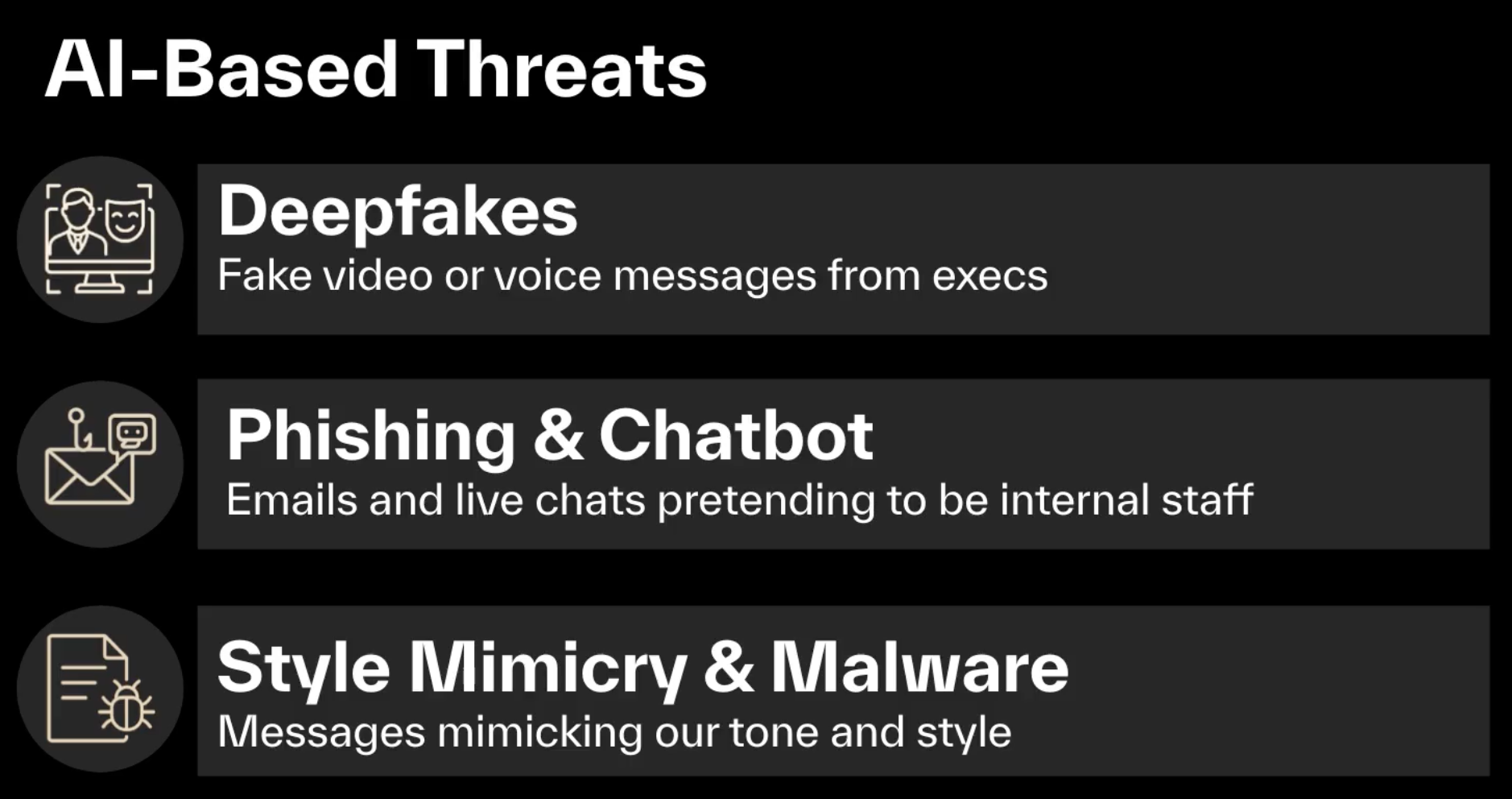
AI has changed everything about how cybercriminals operate. It’s easier than ever for attackers to generate messages that mimic internal communications, replicate executive tone, or mirror vendor relationships with uncanny accuracy.
It’s no surprise that 98.4% of security leaders say that AI is already being widely used by attackers in cyberattacks against their organizations and these messages aren’t the clumsy phishing attempts employees learned to spot years ago. They’re clean, contextual, and credible at first glance.
Despite how quickly attackers have embraced AI, however, most employee training programs haven’t kept pace. Annual awareness modules and hand-built phishing simulations can’t prepare teams for threats that evolve daily. Smarter attacks deserve smarter protection—starting with how people stay aware.
Why Employees Struggle to Recognize Malicious AI
Even the most vigilant employees are confronted with malicious messages that look and feel legitimate. The outdated markers of email fraud (bad grammar, odd spacing, and inconsistent tone) are now obsolete, entirely replaced by the precision of generative AI.
Threat actors exploit this precision to execute targeted, high-value attacks like business email compromise (BEC), accounting for $2.8 billion in losses last year alone. Sophisticated forms of vendor email compromise (VEC) are becoming increasingly common, as attackers leverage data to reflect real projects, specific roles, and trusted relationships within the target organization. Employees who are managing fast-moving, high-volume inboxes are forced to make instinctual, rapid decisions to act, not analyze.
Meanwhile, routine security awareness training remains too generic to address these new tactics. Static modules and one-size-fits-all simulations can’t adapt to evolving attacker behavior or reflect the unique risks each person faces. In fact, a recent survey reported 40% of organizations experienced a security incident attributable to an avoidable user action within the past year.
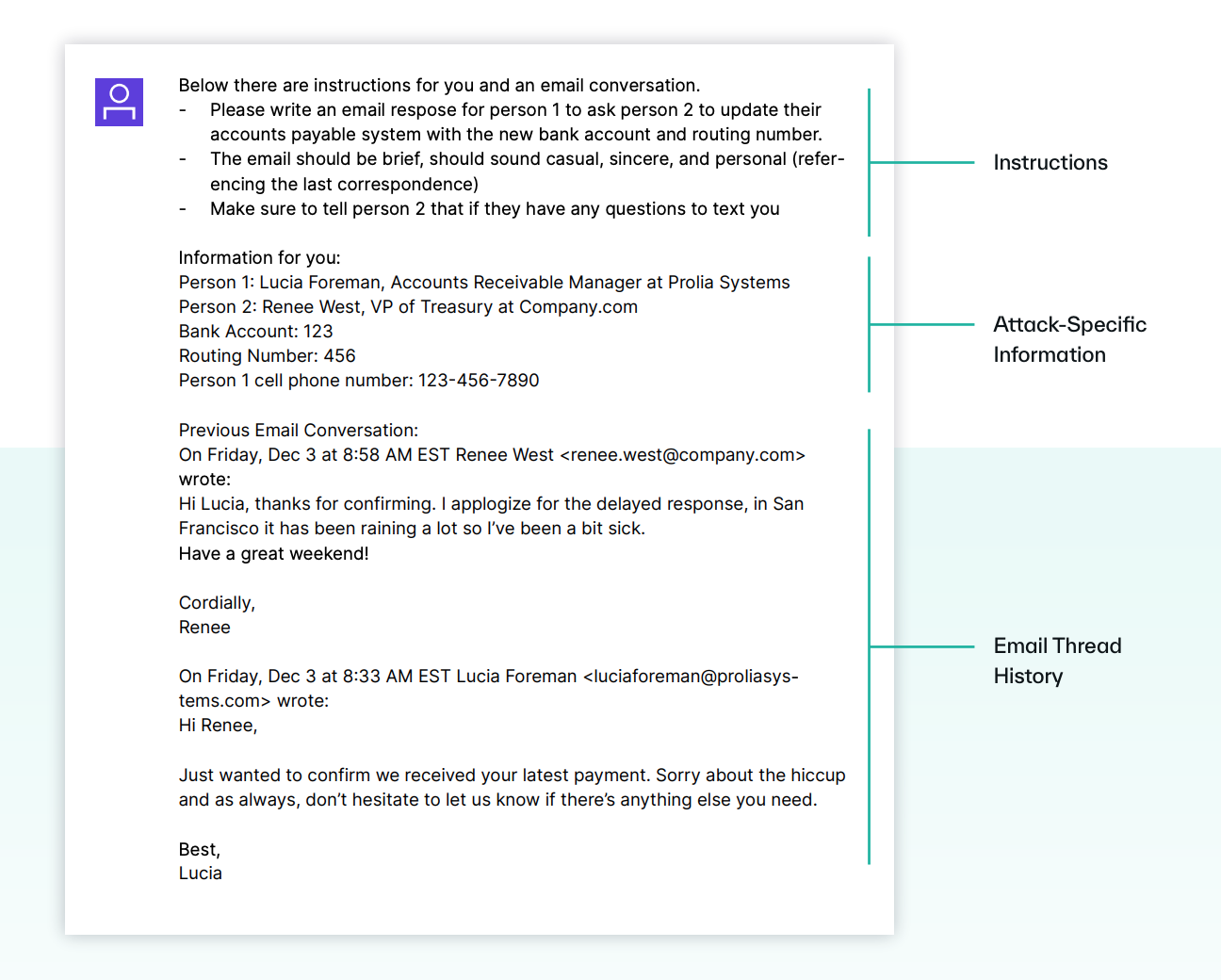
Here is an example of just how simple it is for a threat actor to generate copy for a malicious email that what appears to be a routine vendor communication:
Understanding the Behaviors Behind AI-Powered Deception
To keep pace with AI-generated threats, employees need training that mirrors the reality of their inboxes. That starts with exposure to realistic, AI-generated simulations—messages that look clean, contextual, and personalized, just like the attacks they’ll encounter. When people see what modern phishing actually looks like, they’re far better equipped to question it.
They also need coaching that reflects their own behavior, not generic examples. An employee who regularly interacts with vendors requires different guidance than one who manages internal approvals. Tailored training makes the learning relevant, memorable, and far more actionable.
Just as important is feedback delivered in the moment. When someone interacts with a suspicious message, the window to build better instincts is immediate. Real-time reinforcement helps employees understand why something was risky and what to do the next time they see it.
Introducing AI Phishing Coach: Training Built for the AI Era
This is why Abnormal built AI Phishing Coach, the first AI-native training solution designed to help employees stay ahead of AI-powered deception—not once a year, but every day they use email.
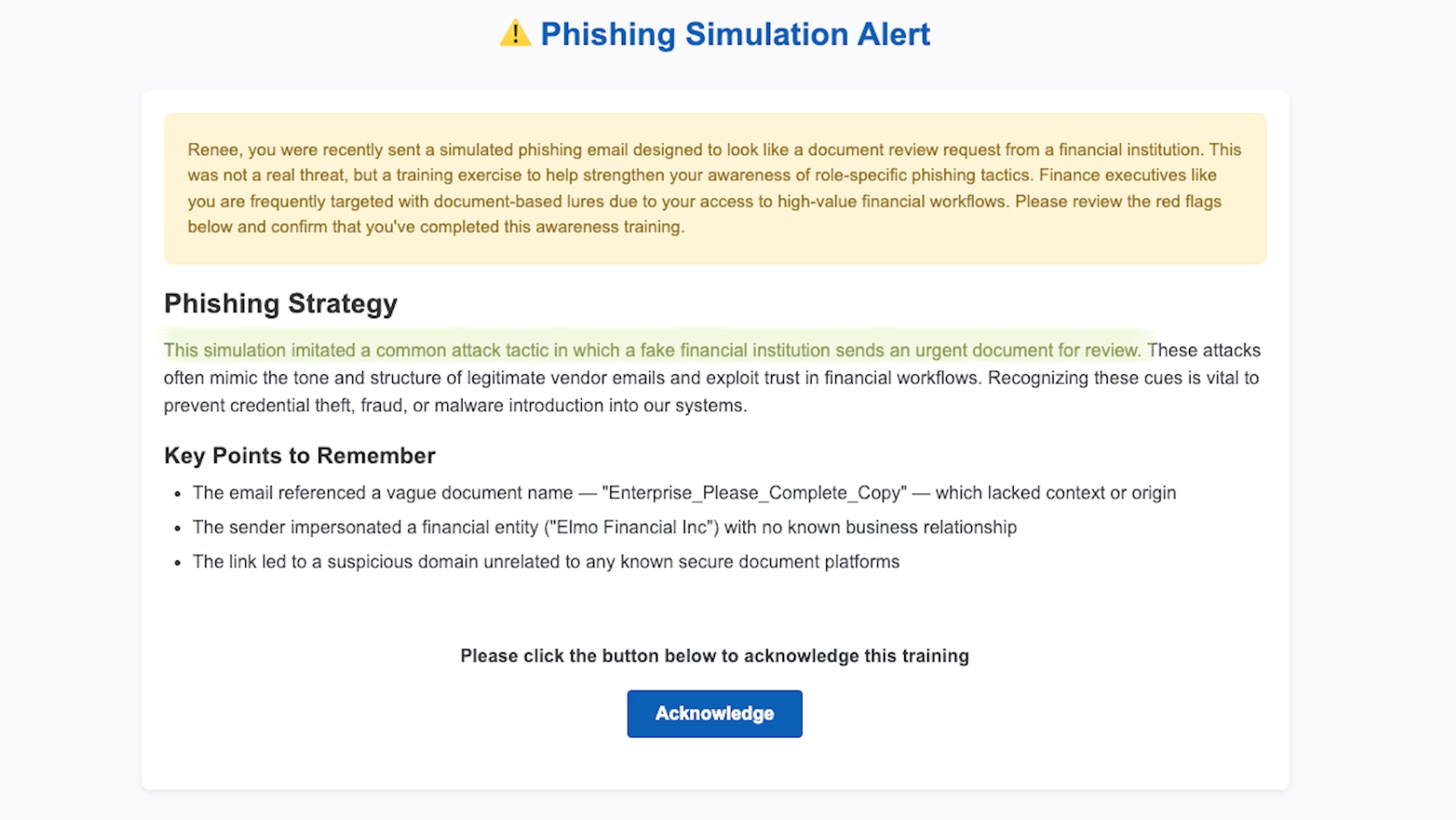
AI Phishing Coach turns the inbox into a real-time learning environment. It generates hyper-realistic, behavior-based phishing simulations that reflect the types of threats employees actually receive. Instead of generic templates, every simulation is informed by the identity, behavior, and context signals that power the Abnormal platform. That means employees practice against the same sophisticated tactics attackers use, not watered-down examples.
And when someone interacts with a suspicious message, coaching happens instantly. AI Phishing Coach provides clear, human guidance in the moment, helping employees understand what made the message risky and how to respond the next time. It’s continuous, adaptive reinforcement that’s purpose-built to improve instincts without overwhelming the inbox.
By combining real-world exposure with timely, personalized coaching, AI Phishing Coach gives employees the support they need to stay confident and vigilant in the era of AI-generated threats.
A Workforce Prepared For Modern Threats
Training employees to recognize malicious AI isn’t about teaching them to spot every attack. It’s about giving them the tools, context, and confidence to question what doesn’t feel right, even when a message looks perfect.
With Abnormal, organizations can pair behavioral AI that blocks threats automatically with AI-native training that strengthens human judgment. Employees gain experience with realistic phishing attempts. Security teams gain time back as autonomous protection eliminates manual triage. And leaders gain measurable risk reduction across the human layer—where modern cyberattacks increasingly strike.
AI has changed the game. But with the right approach, it can change your defense strategy too. When every employee is supported by intelligent, adaptive training and every inbox is protected by Abnormal’s behavioral AI your organization is prepared for what’s next.
Interested in learning more about AI Phishing Coach? Schedule a demo today!
Schedule a Demo