

Points clés
A new AI-powered phishing kit called InboxPrime AI is rapidly gaining adoption across underground cybercrime networks.
First observed in October 2025 by Abnormal researchers, the kit's developer positions it as a "programmatic solution for mass mailings". It is designed to mimic real human emailing behavior and even leverages Gmail’s web interface to evade traditional filtering mechanisms.
InboxPrime AI blends artificial intelligence with operational evasion techniques and promises cybercriminals near-perfect deliverability, automated campaign generation, and a polished, professional interface that mirrors legitimate email marketing software.
Read on to learn more about the capabilities of this phishing kit and what it represents for the future of AI-powered cybercrime.
Inside the InboxPrime AI Platform: Key Features and Capabilities
InboxPrime AI offers a range of automation and anti-detection capabilities designed to help attackers generate convincing phishing content, vary each message, and maximize inbox placement. Below is a breakdown of the platform’s noteworthy features.
User-Friendly Interface
The interface is built for operational efficiency, enabling attackers to manage accounts, proxies, templates, and campaigns through an intuitive dashboard that mirrors commercial email automation tools. Drawing heavily from legitimate SaaS platforms, InboxPrime AI allows users to bulk-edit settings, validate resources, and coordinate large-scale operations with minimal technical effort.
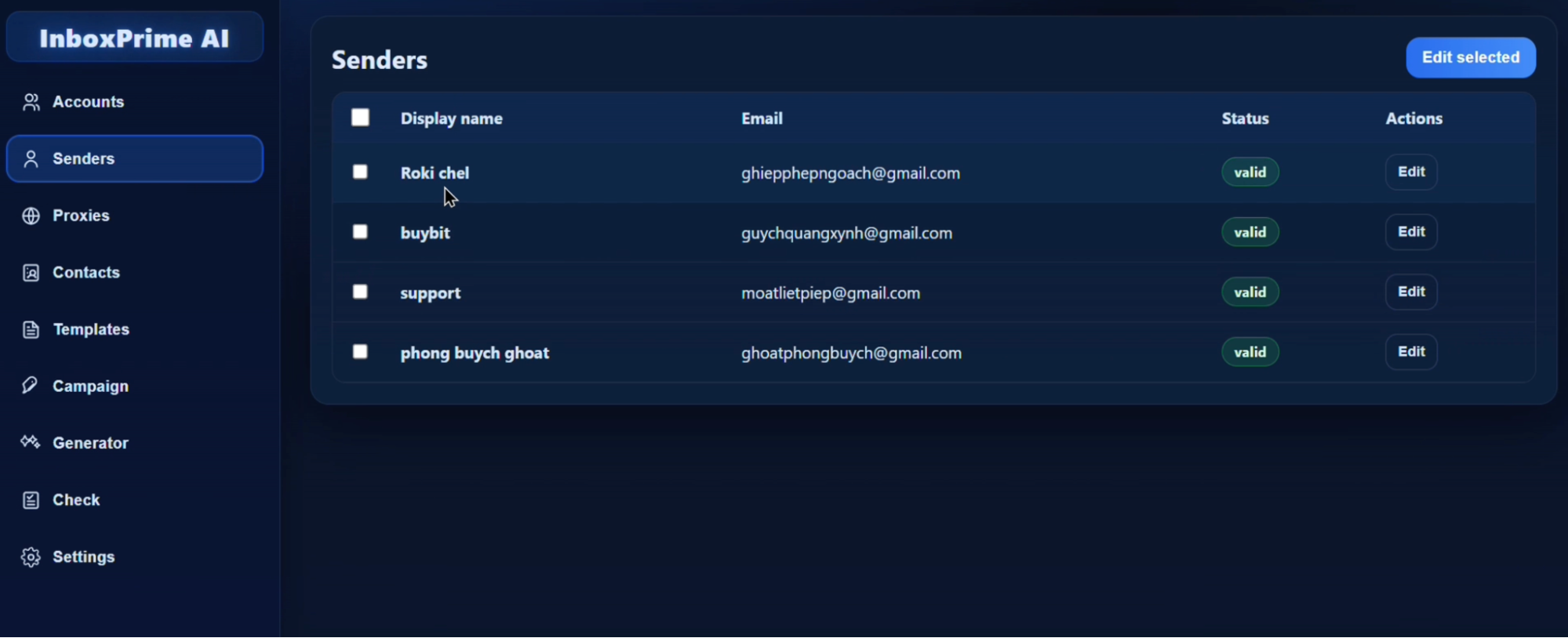
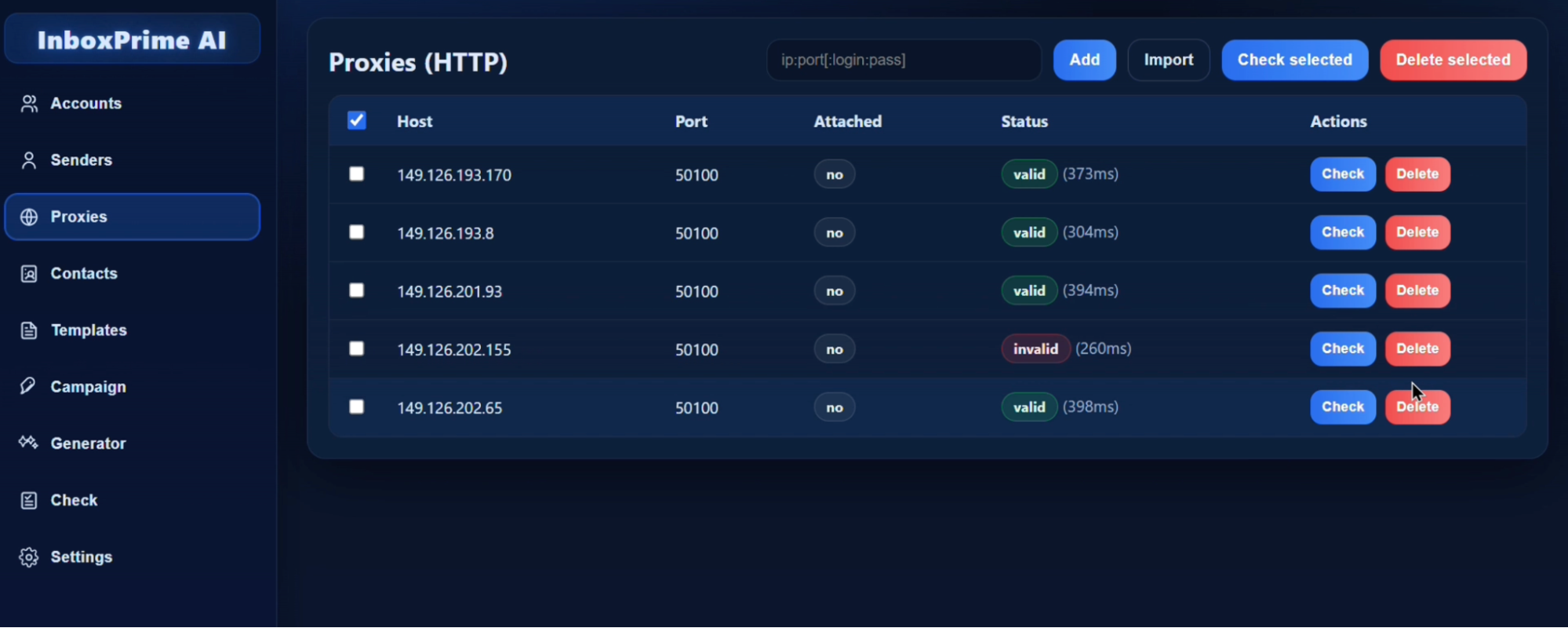
AI-Powered Email Generation
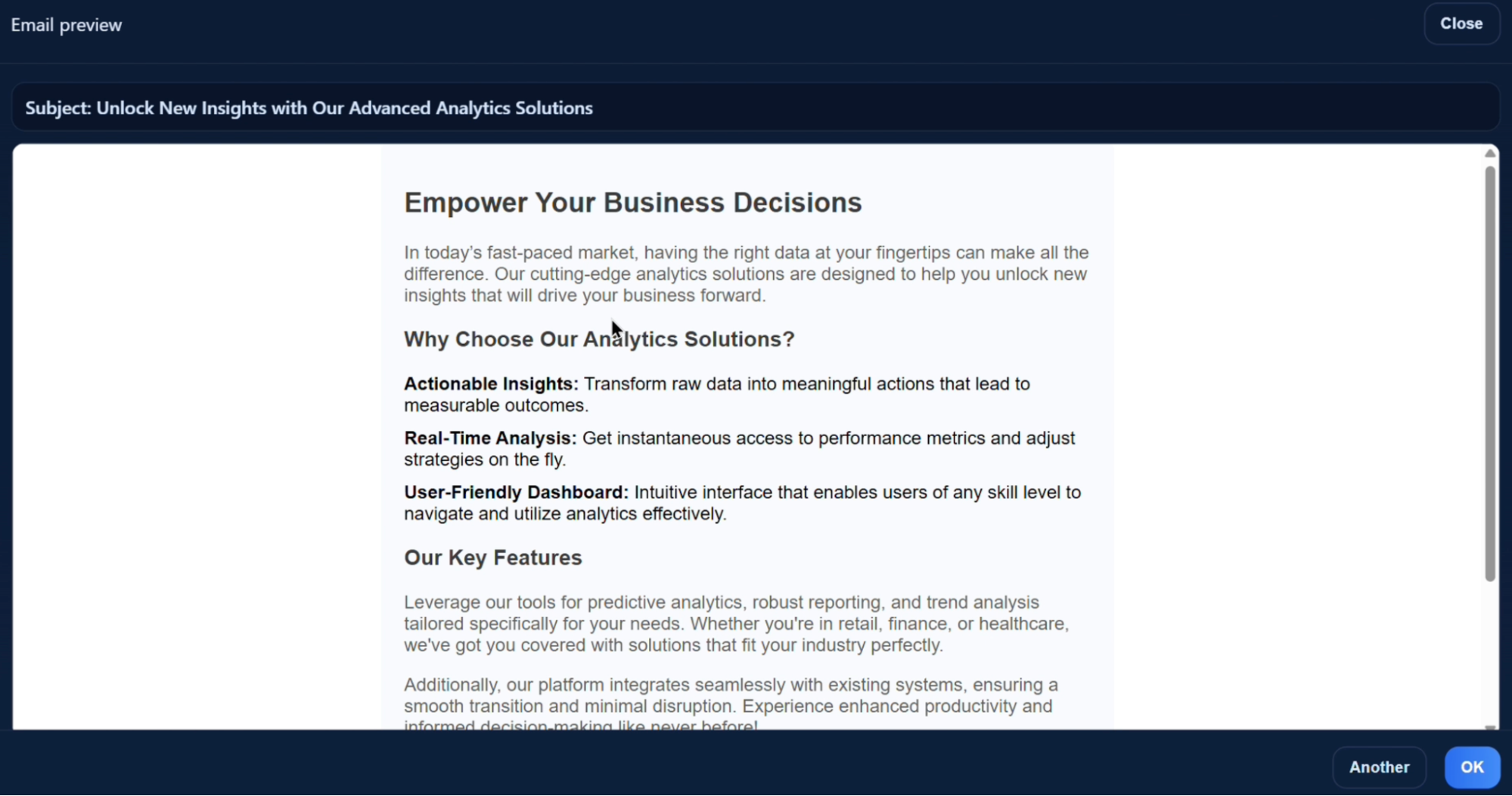
One of InboxPrime AI’s core features is its built-in AI-powered email generator, which can automatically produce fully composed phishing emails—from the subject line to the body text—that closely mimics legitimate business communication. Attackers can define parameters such as language, topic or industry, email length, and desired tone. Then, with these inputs, the toolkit generates believable email content tailored to the attacker’s chosen theme
By automating content generation, InboxPrime AI eliminates the manual labor typically required to craft deceptive emails. This not only accelerates campaign launch time but also ensures consistent message quality, enables scalable, thematic targeting across industries, and empowers attackers to run professional-looking phishing operations without copywriting expertise.
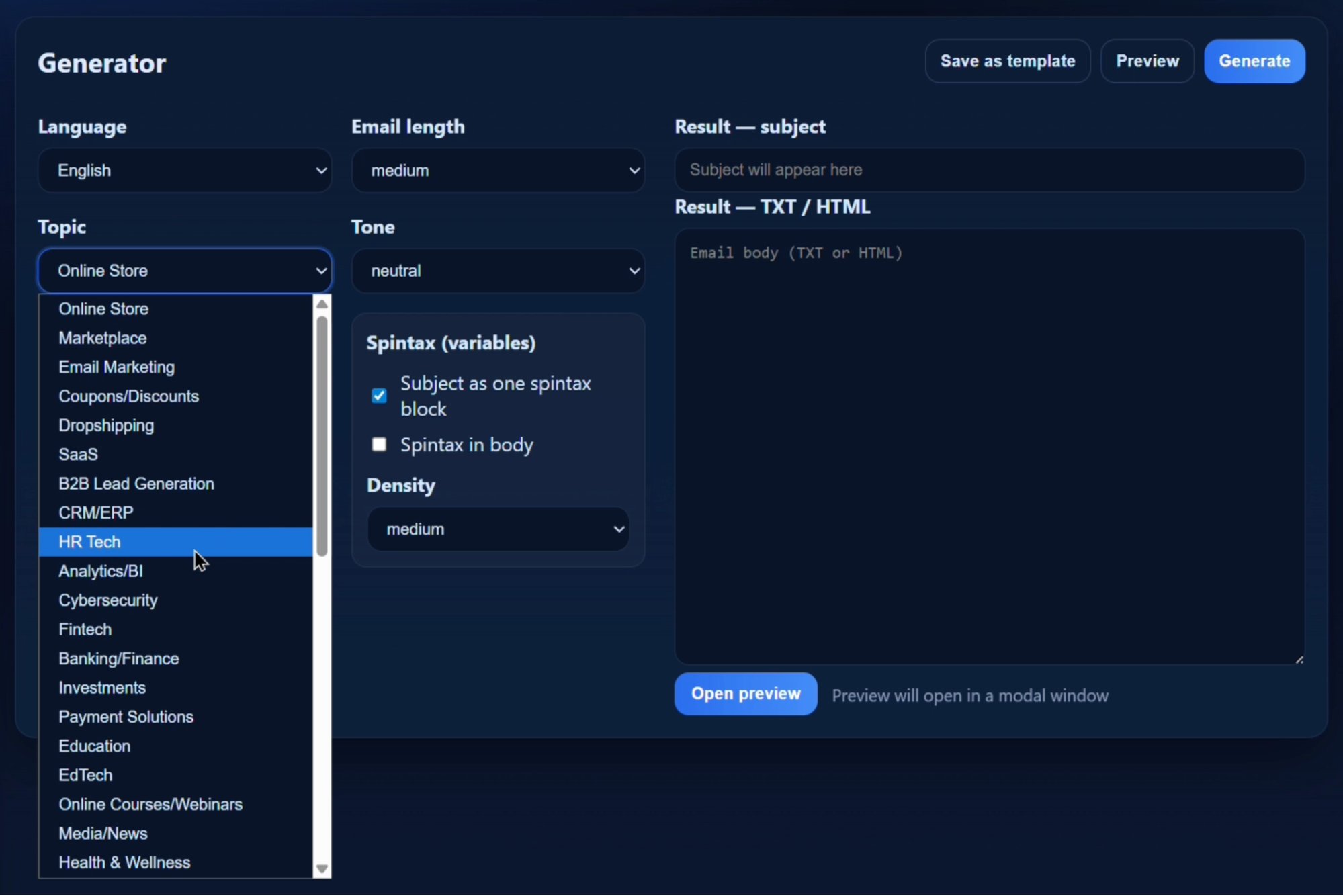
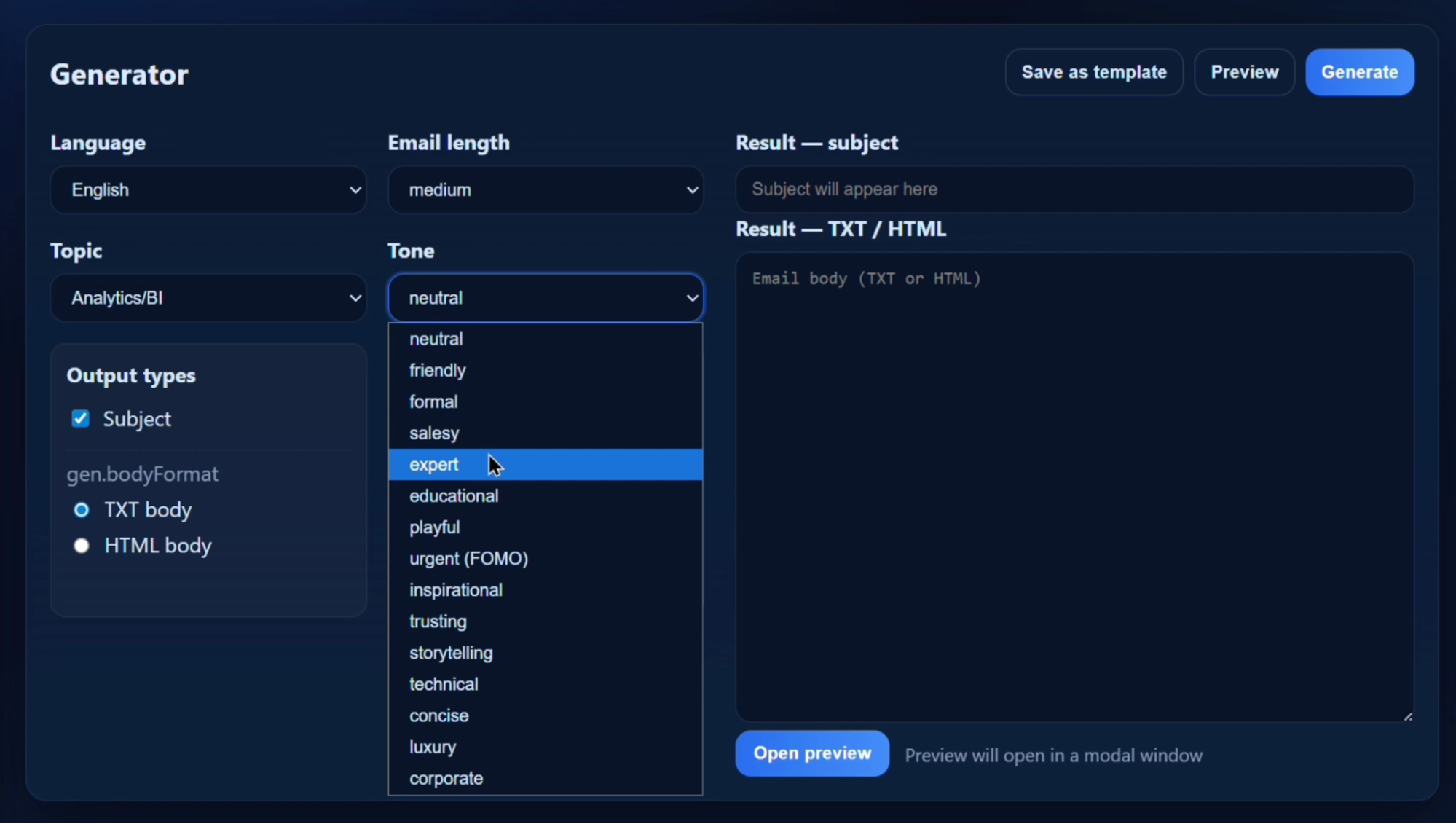
The interface allows users to preview the generated email and save it as a reusable template. With just a few dropdown selections—such as “Analytics/BI” as the topic and “expert” as the tone—the platform can output a fully formed HTML email promoting fake analytics tools or insights. The generated message is styled to match professional outreach, complete with calls to action designed to exploit trust in technical subject matter.
Template Variation Through Spintax
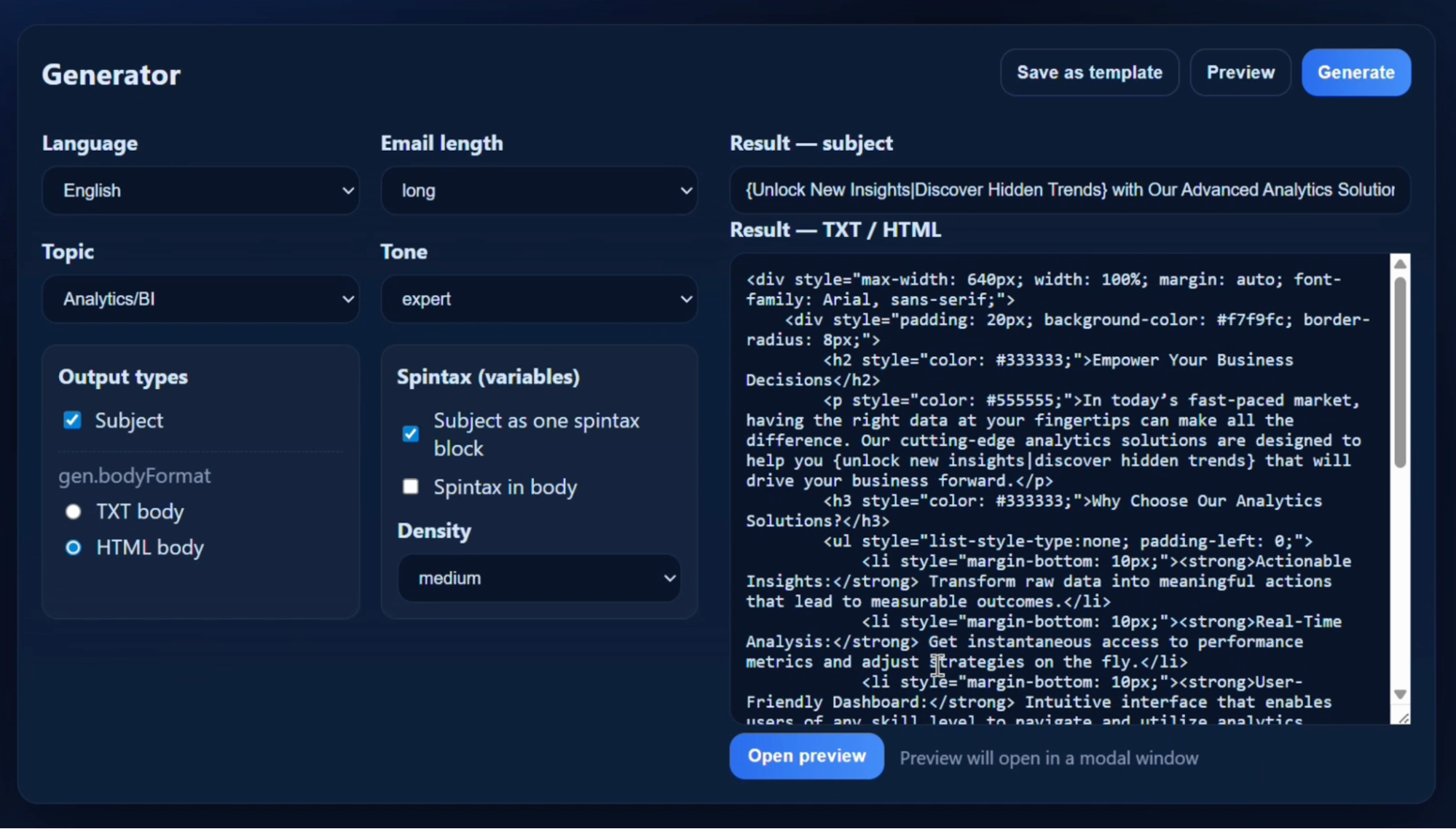
InboxPrime AI can also insert spintax (template variables) to produce slight permutations of each email. This means that no two recipients receive an identical message, and basic content-matching filters have fewer static indicators to detect. This variation helps attackers bypass simple signature-based filters that look for identical content patterns.
Spam Check and Deliverability Review
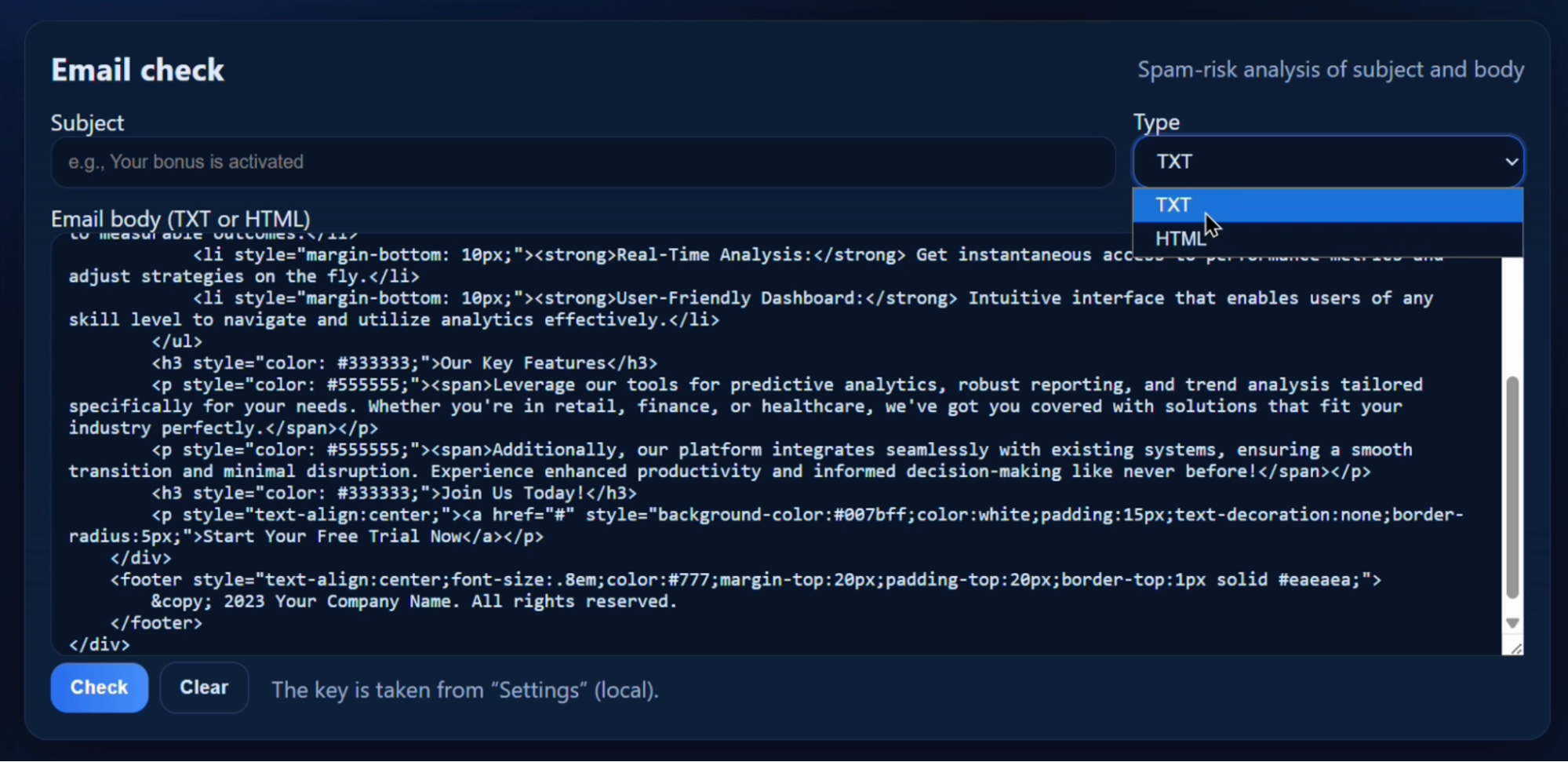
To further maximize inbox placement, the kit includes a real-time spam diagnostic module that can analyze a generated email for common spam-filter triggers, such as problematic keywords, excessive HTML, or suspicious links, and then suggest precise corrections. This functions as an automated quality assurance step to improve deliverability prior to email deployment.
Sender Identity Randomization and Display-Name Spoofing
InboxPrime AI also supports sender identity randomization and spoofing, allowing attackers to customize display names for each Gmail session. Because the kit operates within live Gmail web interfaces, threat actors can cycle through compromised or burner accounts and rotate sender identities, mimicking internal users, vendors, or executives with high fidelity.
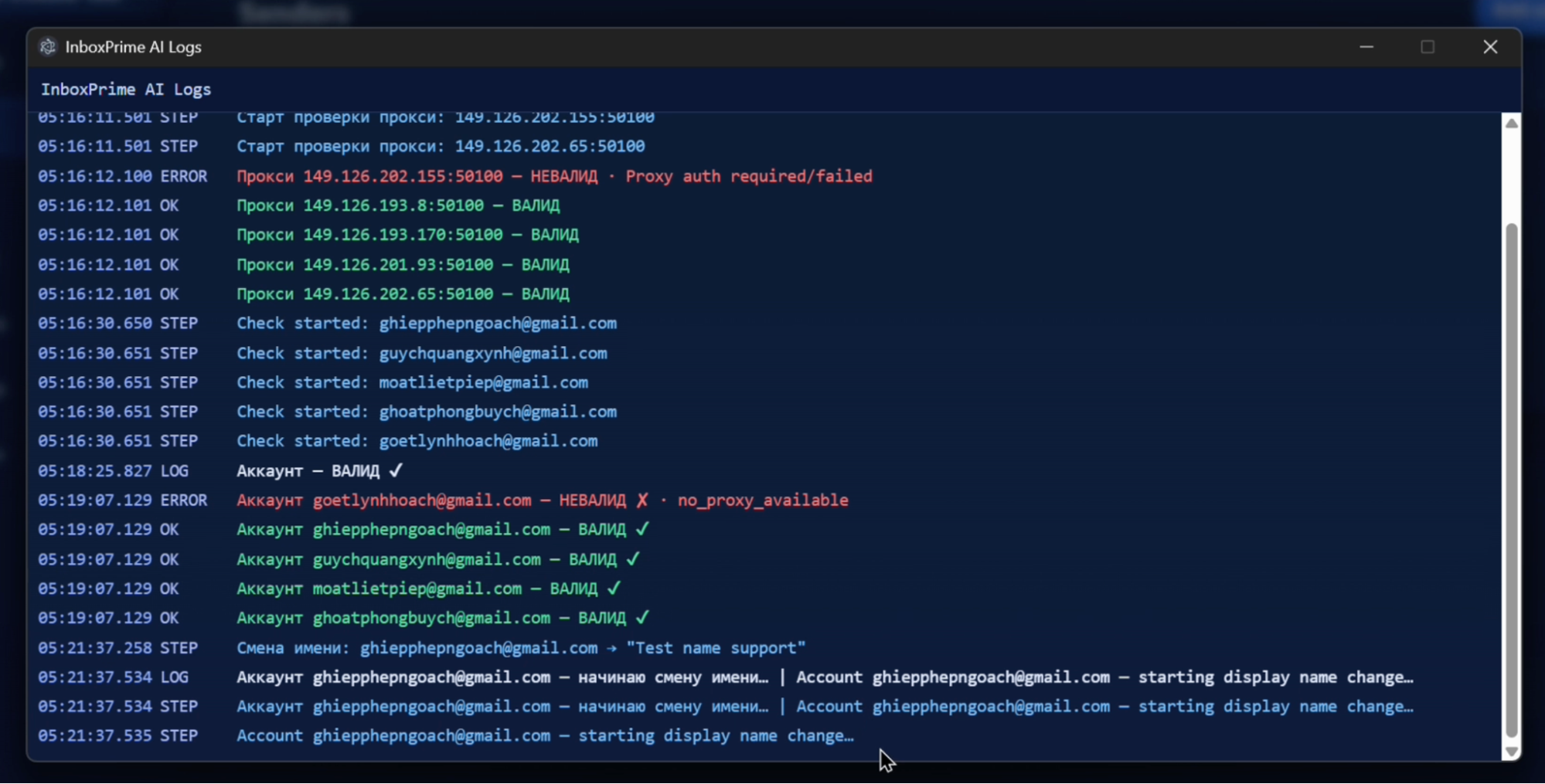
Above, we see the software cycling through proxy servers and then initiating a “display name change” for each Gmail account (lines marked in green) before sending emails. This log confirms that the full kit automates sender name spoofing and other tasks to make its phishing emails appear more legitimate while using Gmail’s infrastructure.
From Subscription Model to One-Time Purchase
Initially distributed under a malware-as-a-service (MaaS) subscription model, InboxPrime AI has since transitioned to a flat-fee model. As of November 2025, the developer began selling the full source code and perpetual license for $1,000—removing subscription dependencies and making the kit more broadly accessible to threat actors.
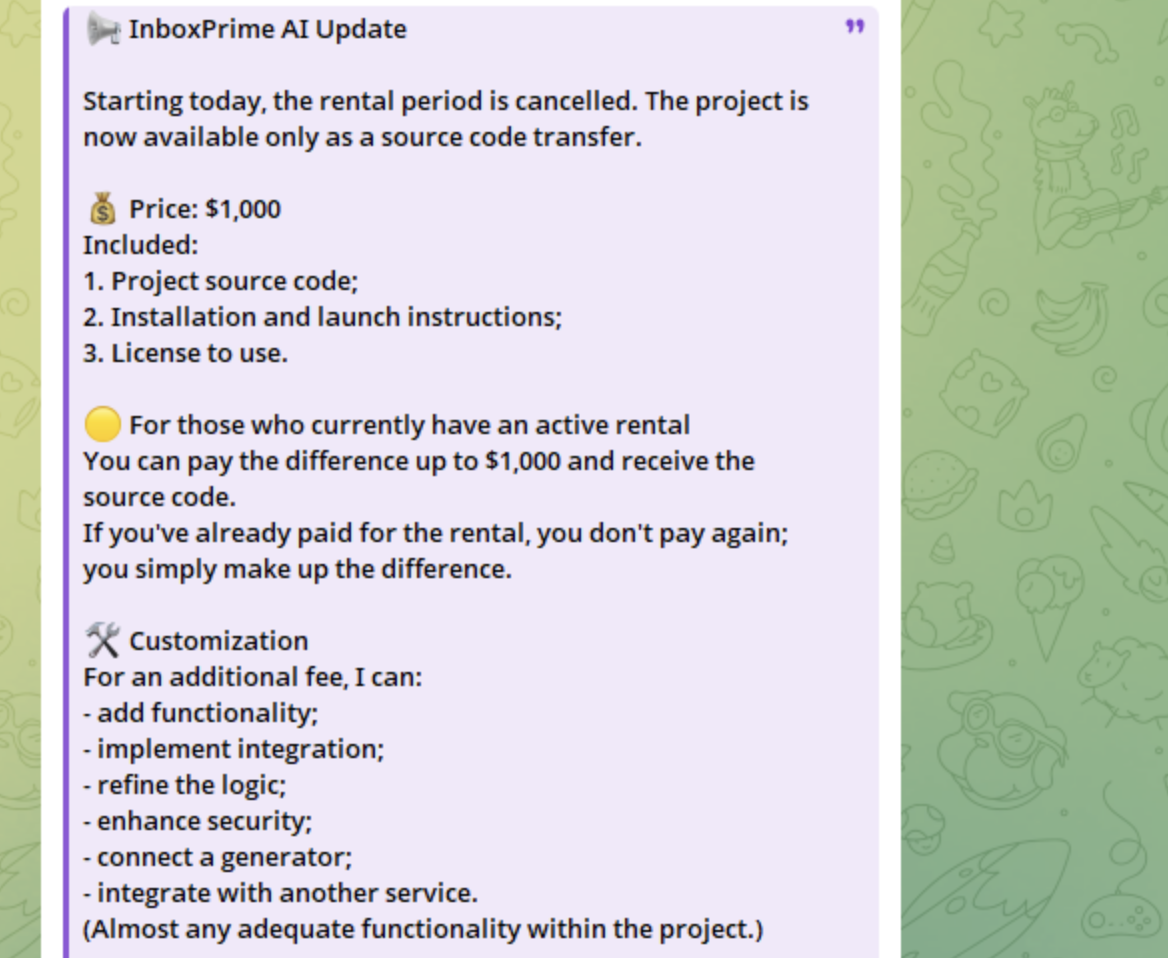
This transition from recurring subscriptions to a one-time sale might signal that the developer felt they had reached a sufficient customer base, or simply wanted to cash out by selling the code more broadly while demand is high.
It could also be a response to trust issues in the cybercrime community, as many cybercriminals prefer owning their tools outright to avoid the risk of a service suddenly disappearing.
In any case, the shift suggests that InboxPrime AI has matured into a stable product with a growing user base. The network associated with the toolkit now has around 1,300 members, indicating a highly active community rather than short-lived hype or a scam.
Why This Matters: The Industrialization of Phishing
Where attackers once needed technical expertise to craft convincing campaigns, InboxPrime AI reduces that requirement to selecting a few parameters from dropdown menus. The barrier to entry for scaled, AI-generated phishing has essentially disappeared.
This industrialization of phishing has direct implications for defenders: more attackers can now launch more campaigns with more volume, without any corresponding increase in defender bandwidth or resources. Security teams already stretched thin will face an expanding threat surface driven by tools that democratize sophisticated attack capabilities.
More critically, this toolkit underscores a broader shift in the threat landscape: cybercriminals are adopting AI tooling faster than legacy defenses can respond.
A Phishing Kit Built Specifically to Bypass Legacy Tools
InboxPrime AI automates email generation, template variation, identity spoofing, and human-like Gmail sending behavior—all explicitly designed to bypass traditional filtering and increase inbox placement.
Traditional secure email gateways and rule-based filters focus on static indicators like keywords, HTML structures, and sender anomalies. InboxPrime AI is purpose-built to strip out those indicators and mimic legitimate messaging patterns. The kit's spam checker even provides automated quality assurance to remove common detection triggers before emails are sent.
This reinforces a long-standing reality: static controls cannot keep up with AI-accelerated threats. When attack tools evolve faster than the defenses designed to stop them, organizations relying on legacy email security will find themselves perpetually behind the curve.
Staying Ahead of AI-Enabled Cybercrime
Cybercriminals now have on-demand access to AI-powered tools that enhance the believability and scalability of their campaigns, regardless of skill level. And similar kits will continue to appear, each pushing phishing toward greater complexity and volume while staying easy to obtain on criminal marketplaces.
Legacy email defenses, built around static rules and known indicators, simply cannot keep pace with this level of automation. Behavioral AI offers a path forward by analyzing communication patterns, spotting subtle inconsistencies, and identifying intent rather than relying on surface-level signals. Modern threats demand modern detection—and behavioral AI is built for exactly this landscape.
For additional insight into the attack landscape and analyses of other dark web tools, visit Abnormal Intelligence, our threat intelligence data and research hub.
