
The Recap
The Product Knowledge Base, or PKB, exists because of a problem every fast-moving SaaS company shares: the product changes constantly, and those changes have to reach R&D, GTM reps, and customers. The old answer was Product Hub, where PMs were each assigned their own documentation pages to keep current. Alethea owned the IES pages, someone else owned another area, and so on.
That mostly didn't hold up. Much of Product Hub was deprecated over the years, partly because keeping people on top of manual updates is hard, and partly because the product keeps shipping faster. Abnormal released four different products out of a single town hall. No one can document that much, just in time, by hand.
The PKB's answer was more AI. The information about how a product works usually already exists, in a GitHub PR, a Slack message where a PM explains a feature, or a Jira ticket that just flipped to complete. Even when nothing is written down by a human, the PKB can mine those sources and reverse-engineer how the product works.
The result is an AI-native, AI-generated, AI-maintained knowledge base that updates instantly as the product changes. Identity Attack Protection, which just launched and is being demoed at Black Hat, already had roadmap, availability, integrations, and feature pages before its PM, Tanisha, had to think about documentation. She reviewed it and confirmed it was pretty much right, give or take a few small fixes.
The New Capabilities
The work over the past couple of weeks focused on a single hard question: how do humans and AI coexist on the same documentation page?
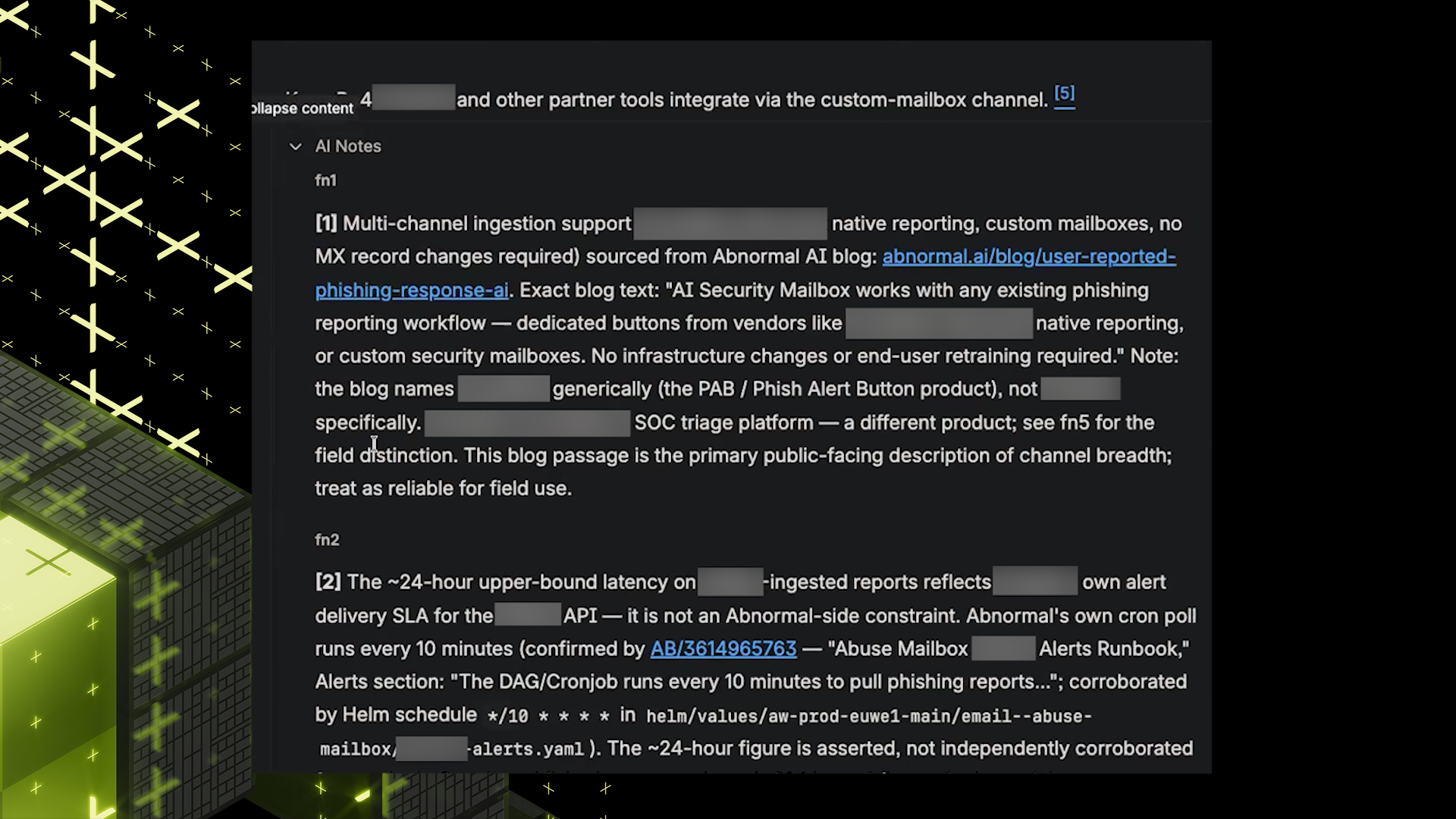
The tension is concrete. To maintain a page, the AI has to track a lot of detail in line, like which Jira ticket and which code change a given feature was documented from, otherwise it doesn't know what to update later. Earlier versions of the PKB exposed all of that, and the pages were nearly impossible for a person to parse.
The fix was to split every page in two. There's a clean, human-readable section, and a separate AI notes section, hidden by default, where the AI writes its own detailed record and links each note back to the content it supports. Humans get something tidy to glance over and supervise, while the AI keeps the dense bookkeeping it needs. As soon as code changes or a Jira ticket updates its status, the AI knows which linked content to update.
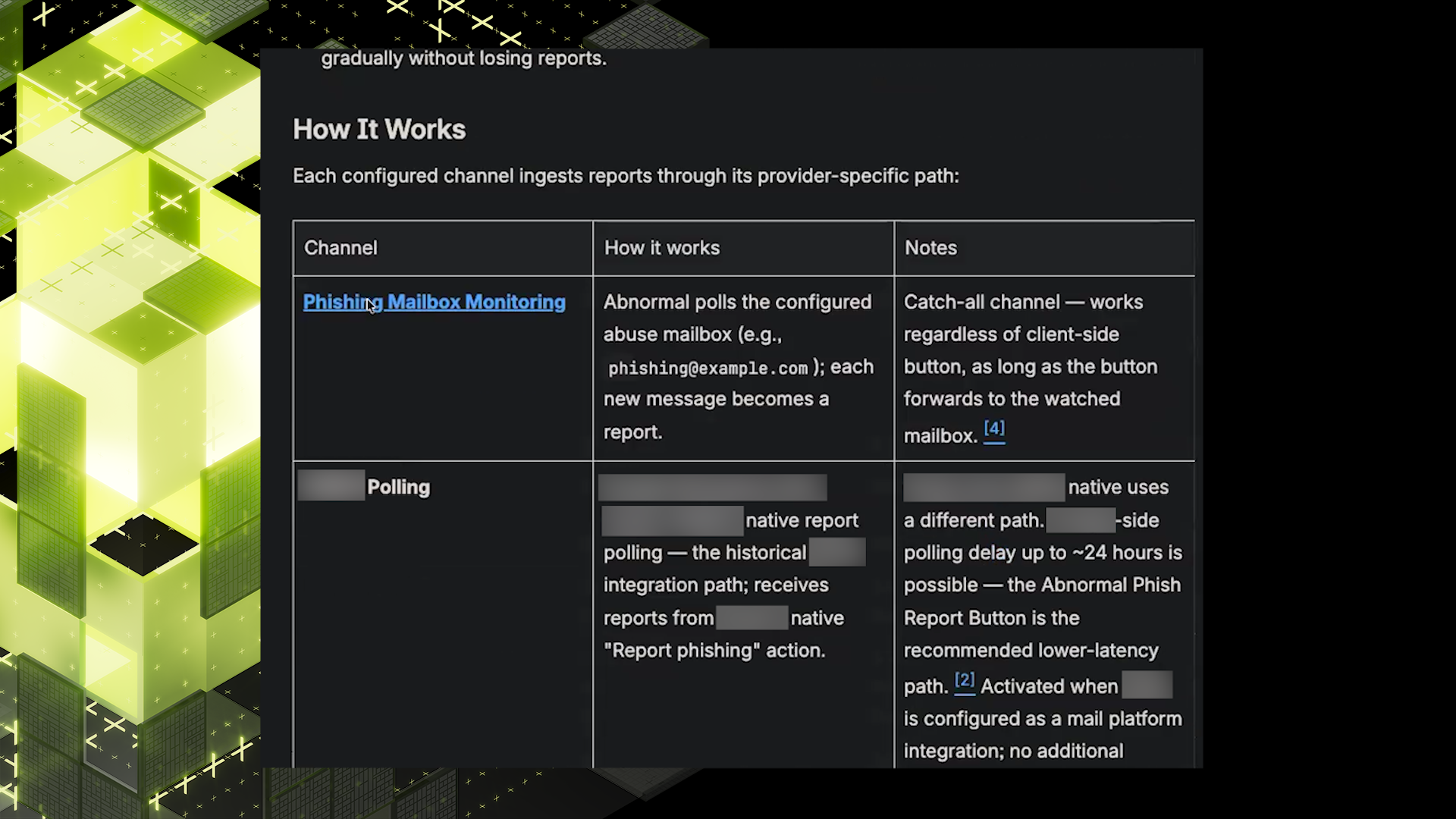
Two more changes made the pages trustworthy. First, Andy got strict about page assignment, writing standards for what reviewers are actually comfortable owning. Because this guidance is AI-facing, it tells the system how to assign pages so the right people end up reviewing them. Second, a Contribution Guide locks down taxonomy. The AI had been inventing odd groupings, like filing D360 under platform features when it actually belongs under IES, which made pages confusing to navigate. The guide gives strict rules for how products are organized so the structure stays consistent.
The Impact
Together, these changes let human DRIs and PMs simply glance over a page and trust it, with humans and AI operating in the same plane instead of fighting over the same text.
The payoff shows up in speed and coverage. Documentation now keeps pace with a product that ships faster than any team could manually track. A brand-new product can be fully documented before its PM starts writing anything, as Identity Attack Protection showed. Pages stay current automatically as code and tickets change, and a consistent taxonomy keeps everything navigable for the people who rely on it.
What's Next
The immediate proof point is Identity Attack Protection at Black Hat, where reps and customers can work from documentation the PKB generated and Tanisha lightly corrected, rather than waiting on a manual write-up.
With the human and AI coexistence model in place, the natural next step is breadth: assigning more pages to more reviewers under the new standards, and pointing the mining approach at the full stream of releases so nothing slips through undocumented.
The deeper bet is that documentation stops being a manual chore that lags behind the product and becomes something AI maintains continuously, with humans supervising rather than authoring. If that holds, the faster Abnormal ships, the more valuable the knowledge base becomes, instead of the other way around.
