
The Recap
In the original Account Prioritizer, the goal was to solve a broad problem: SDRs receive leads from multiple sources (Salesforce, Sixth Sense, AE lists, partners, etc.) and have no unified way to decide which accounts to prioritize.
The first version focused on aggregating those signals into a single ranked list, helping SDRs answer a simple question: “Who should I reach out to this week?”
But as Tim dug deeper, he uncovered a more nuanced opportunity. Not all leads are equal, and some of the most valuable ones are hiding in plain sight.
The New Capabilities
This iteration focuses specifically on disqualified accounts: opportunities that were previously closed out but may now be ready for re-engagement. The challenge is that the most important signals for re-engagement don’t live in clean fields. They’re buried in Gong call transcripts, offhand comments during conversations, and inconsistent or incomplete Salesforce notes.
For example:
- “Come back next quarter when budget opens up”
- “We just signed with a competitor. Check back in a year”
These signals are incredibly valuable, but historically unstructured and hard to track. This new workflow analyzes thousands of accounts and extracts those signals automatically.
It identifies:
- when an account might be ready to revisit
- who to reach out to
- what pain points were previously mentioned
- how to approach the outreach.
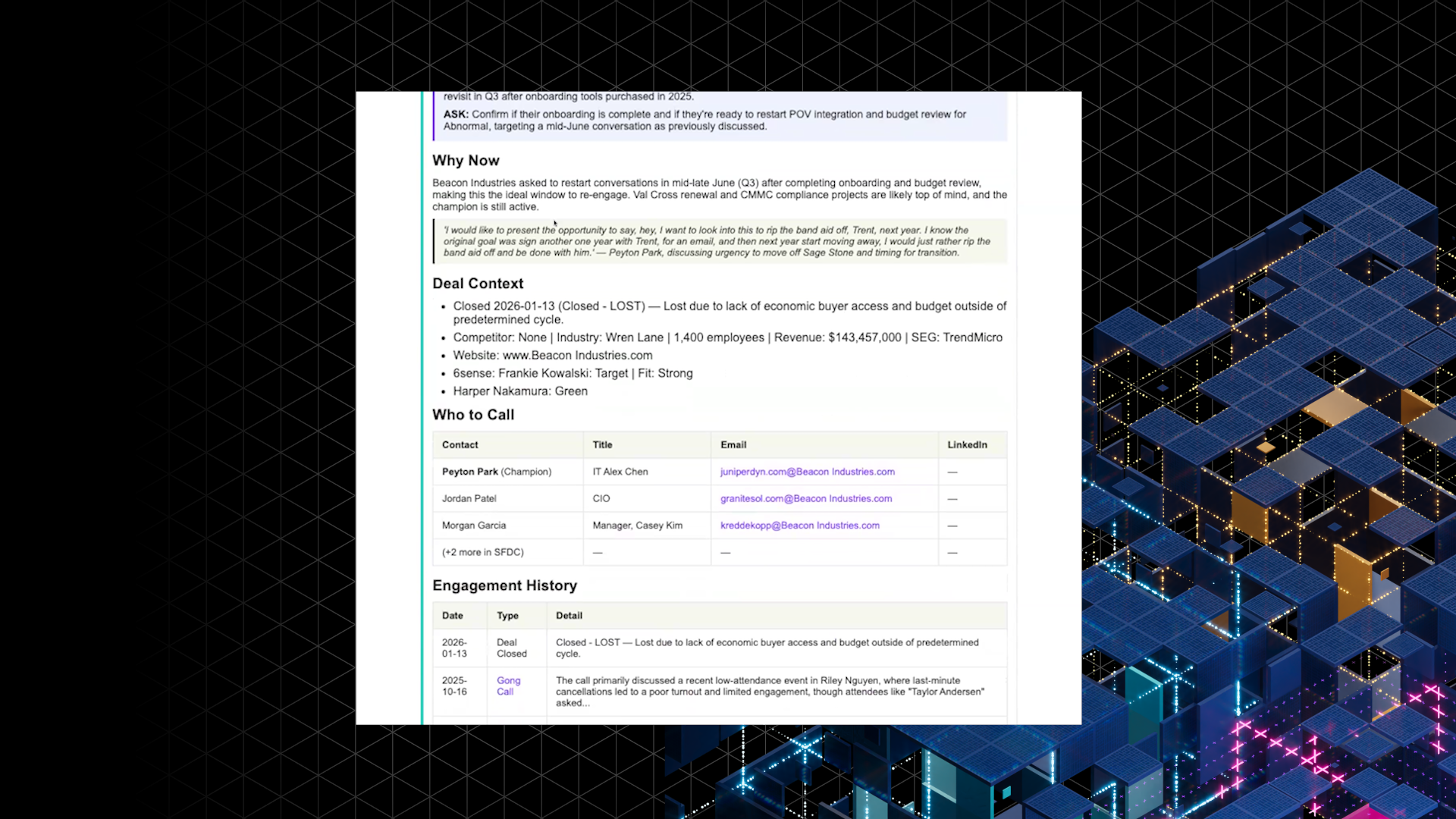
The output is a prioritized re-engagement report that includes:
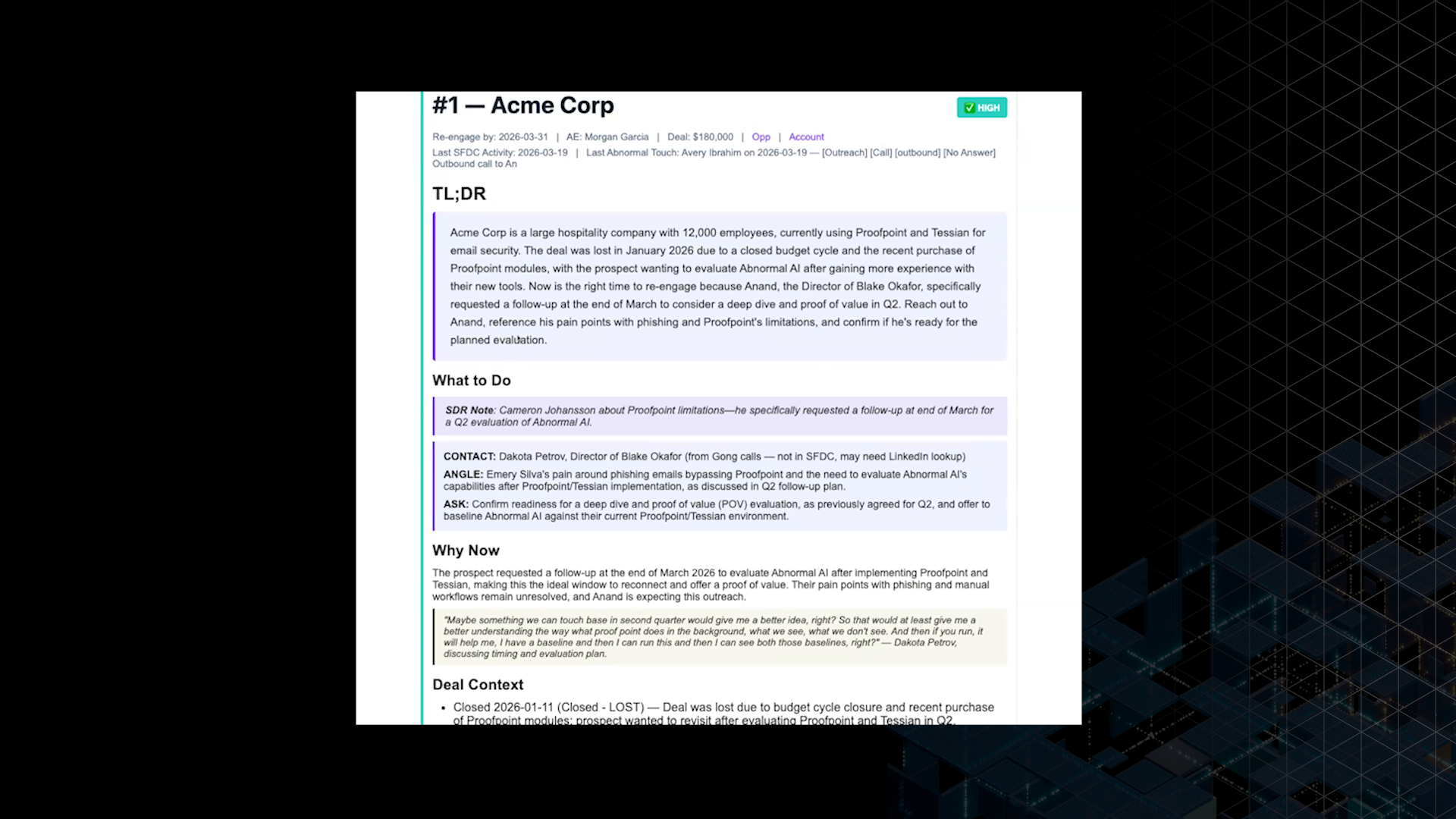
- a ranked list of accounts based on timing and signal strength
- an engagement summary for each account
- persona-level context for contacts
- and a suggested reach-out plan tailored to past interactions
The Impact
This shifts account prioritization from static scoring to time-aware intelligence. Instead of treating disqualified accounts as lost, SDRs can now identify which ones are becoming relevant again, act at the right moment, and re-engage with context that feels timely and informed.
It also unlocks value from previously underutilized data. Gong transcripts, often rich with intent signals, are no longer just records of past conversations, but inputs into future pipeline generation.
Most importantly, it reduces guesswork. SDRs don’t need to remember who said what months ago. The system surfaces that context automatically and translates it into action.
What’s Next
This is still an early iteration, with ongoing refinement around formatting, signal weighting, and feedback loops from pilot users.
Next steps include:
- improving output usability for SDR workflows
- integrating directly into Salesforce or email delivery
- refining how timing signals are ranked and surfaced
- and expanding beyond disqualified accounts into broader lifecycle prioritization
Ultimately, this work is building toward a larger vision: a fully intelligent account prioritization system that not only tells reps who to contact, but when, why, and how to win the conversation.
