Abnormal Extends Behavioral AI to Identity and AI SecurityLearn more

CSM Workbench

Truong Nguyen built CSM Workbench, a weekly prioritization workflow for Customer Success. In this second episode, he extends the workbench past prioritization and into action, adding two skills that turn a flagged account into a ready-to-use exec brief and a drafted call to action.

Demo visuals include blurred data or synthetic placeholders to protect customer privacy.

Truong Nguyen built CSM Workbench, a weekly prioritization workflow for Customer Success. In this second episode, he extends the workbench past prioritization and into action, adding two skills that turn a flagged account into a ready-to-use exec brief and a drafted call to action.

From Ranking to Action

The first episode answered a single question: which accounts should a CSM focus on this week. This episode picks up right after that. Once the workbench surfaces the right accounts, the harder work begins, which is deciding what to actually do about each one. EP2 is about closing that gap inside the same flow.

Acting on Risk Stays Manual

Surfacing risk was only half the job. Once a CSM knew an account needed attention, building the response was still slow and uneven. The context existed, but assembling it and shaping a plan fell back on memory and individual habit.

Three frictions kept stacking up for CSMs:

  1. Assembling the context to act on an account meant pulling signals from across eight-plus systems, which could take hours per account.
  2. Two CSMs could define risk differently, so the response to a similar account varied from one person to the next.
  3. Without a shared structure, action plans were hard to standardize across the whole CS function.

That left the response to an at-risk account too dependent on who happened to be working it, rather than on a repeatable play.

Two Skills, One Workflow

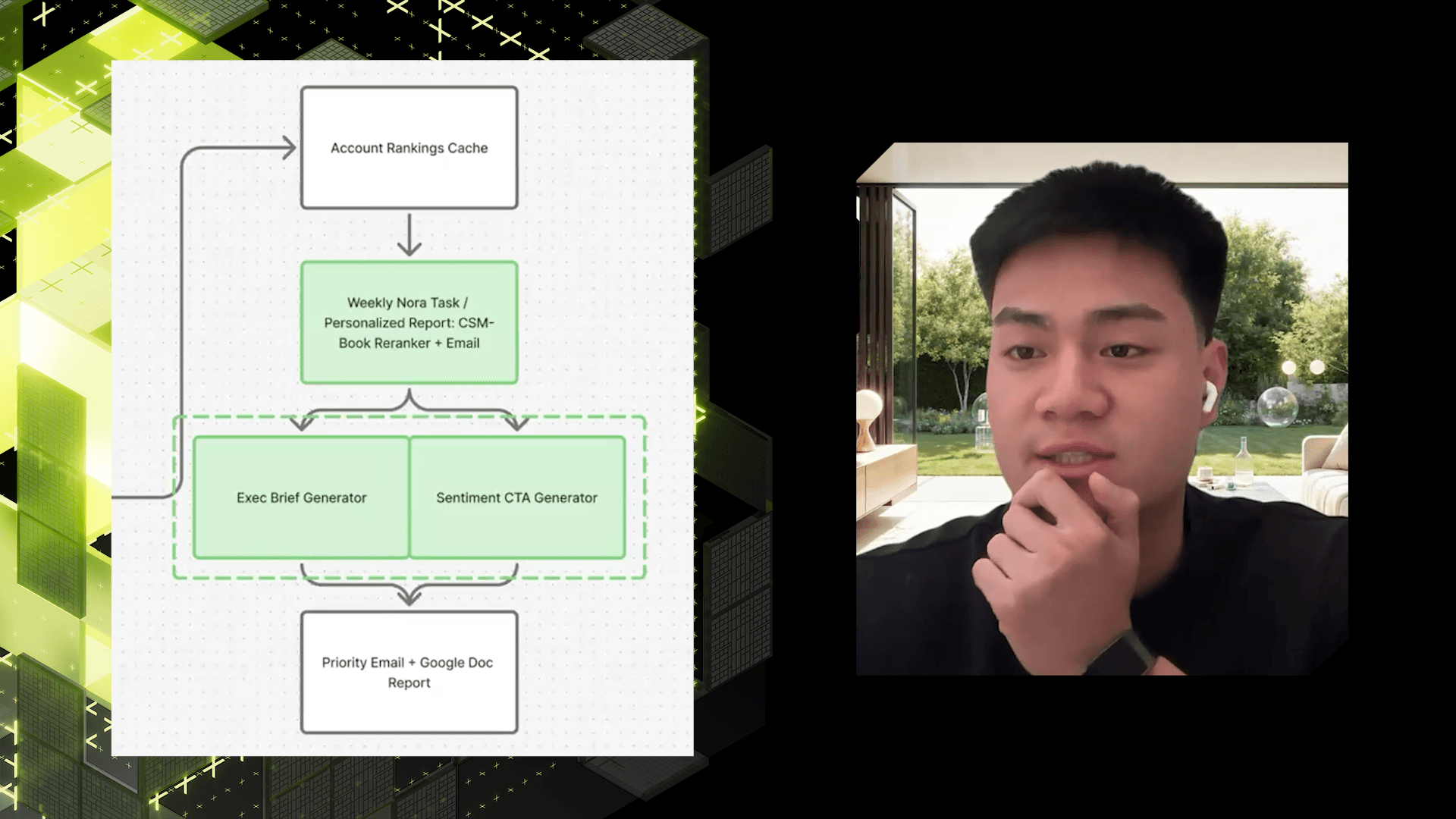
In this episode, Truong adds two skills to the existing weekly prioritizer, both designed to draft the first version of the work for the CSM. The point of both is consistency. 


CSM_Workbench_EP2_Truong_Nguyen_Screengrab_TC0.48.png

As Truong framed it in the demo, the goal when "we're actioning on these accounts" is to "make them more structured and standardized amongst our whole CS function," so the workbench drafts the action instead of leaving each CSM to start from a blank page.

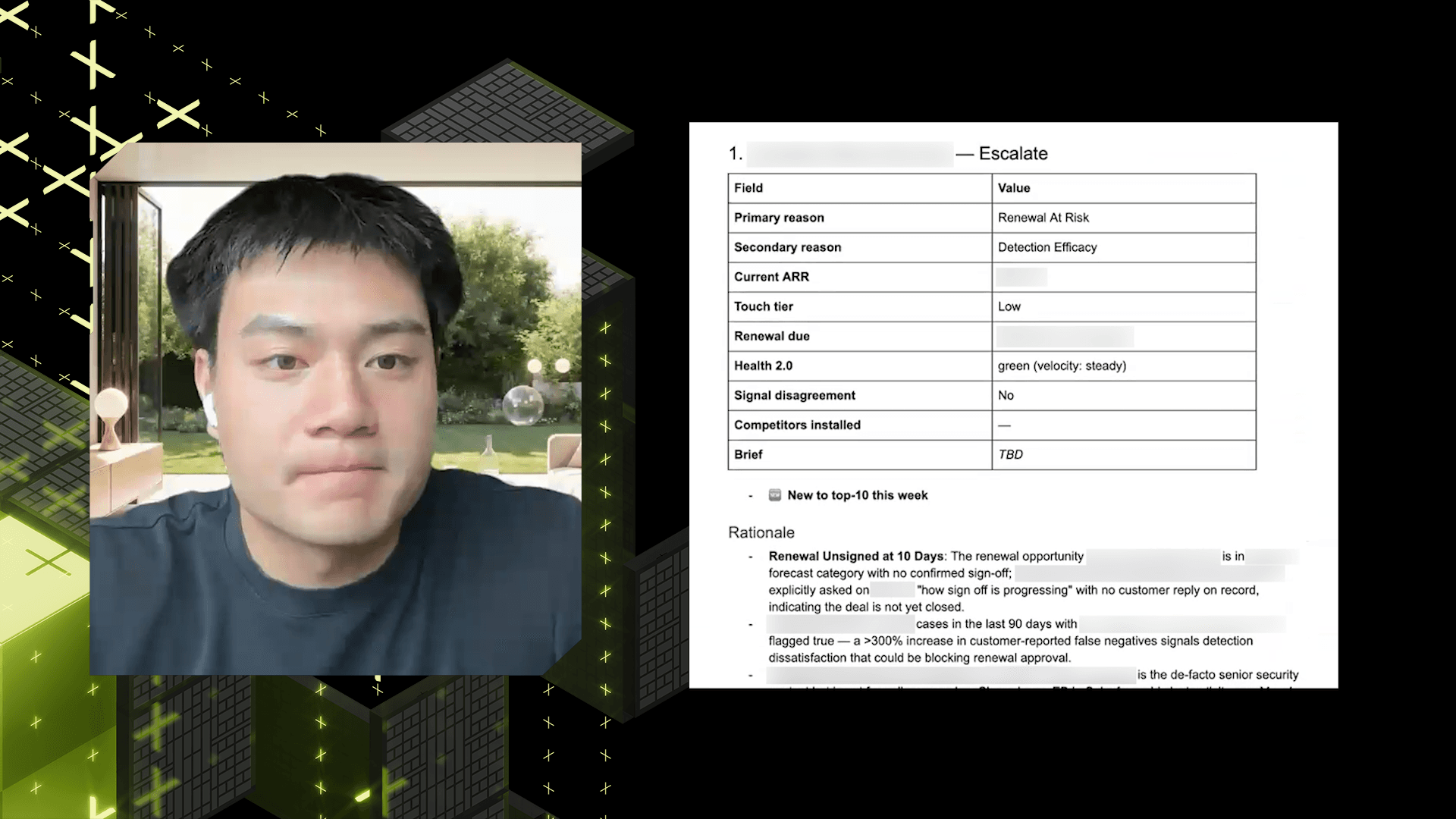
  • Generates an exec brief when an account escalates, is gated on an upcoming renewal, or has a yellow or red health score
  • Packs the brief with an account snapshot, a short summary, key customer contacts, and an AI-recommended action drawn from past CS plays
  • Drafts a call to action inside Gainsight when trigger conditions are met, templated on how CSMs already write them
  • Structures each draft with the reason an account is at risk, an action plan with a timeline, and cross-functional asks
  • Keeps the weekly view CSMs rely on: a Monday meeting with the top five priorities and a Google Doc of the top ten accounts

The result connects back to the original problem. Instead of rebuilding context and a plan by hand for every account, the CSM opens a drafted brief or call to action and edits from there, which makes the response both faster and more consistent.

From Insight to Action

This episode is less about finding risk and more about acting on it well. For CSMs, the value is a drafted starting point. For CS leaders, the value is a more consistent way for the team to respond to similar accounts.

  • CSMs get a drafted brief and call to action instead of assembling context by hand for each account
  • An exec sponsor gets a fast way to catch up before reaching out to a customer
  • CS leaders get a more consistent way to act on risk across similar books of business
  • Action plans draw on past CS plays, so effective responses are reused rather than reinvented

The next step is the one Truong names in the demo. The workflow is live with a small pilot cohort of about three CSMs, and the plan is to expand it to roughly ten the following week to gather feedback before a wider rollout.

What the Rollout Signals

Episode 1 gave CSMs a ranked queue. This episode gives them a drafted response to go with it, which is the more meaningful shift. Once the system can propose a structured action plan rather than just a priority list, the weekly workflow starts to carry a point of view about what good looks like, which makes it repeatable across a team rather than a single power user.

That is the bigger signal. At Abnormal, the strongest internal AI workflows do not just organize information; they standardize how people decide what to do next. This episode shows Customer Success moving from a shared view of risk to a shared way of acting on it, which is exactly the kind of AI-native operating model the company is building team by team.

Keep exploring

Browse more workflows or follow other series.