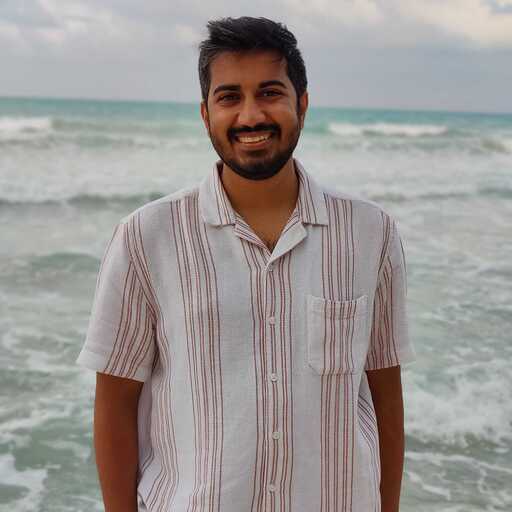
Meet Nikhil Yadav, Technical Support Engineer
When Nikhil Yadav joined Abnormal, he thought technical expertise would define his success. Two years later, he’s learned that adaptability, curiosity, and trust are the real differentiators — both in engineering and in life.
March 9, 2026

Nikhil Yadav has built his career on staying curious — and that mindset has served him well in a role that never stops evolving.
“I’ve worked under several managers, supported multiple regions, and handled everything from minor troubleshooting to major escalations,” he says. “At first, every change felt like starting over. But over time, I realized those shifts were teaching me how to think differently.”
Coming from a service-based company where processes were tightly controlled, Nikhil initially tried to find the “right way” to do things under each new manager. Instead, he discovered there isn’t one. Each leader brought a new approach to prioritizing issues and collaborating across teams, pushing him to stay flexible and proactive.
“I started treating each transition as a masterclass in adaptability.”
That shift in mindset became the foundation for how he learns, leads, and solves problems today.
Finding His Rhythm in APAC
The biggest test of that adaptability came when Nikhil took on the APAC region alone.
“The first few weeks were brutal,” he admits. He was the single point of contact across time zones, handling customers he’d never worked with before while navigating urgent escalations. “It felt like I was constantly playing catch-up.”
The turning point was realizing he didn’t need to solve everything by himself.
“What challenged me most wasn’t the technical complexity — it was realizing I was trying to be a hero,” he says. Once he started partnering closely with Customer Success Managers, Account Executives, and Level 2 engineers, everything changed. Collaborative rhythms formed. Documentation improved. Triage became more systematic.
By the end, Nikhil wasn’t just managing APAC — he was thriving. What began as a source of overwhelm became a defining moment in his growth — one that taught him the value of teamwork, clarity, and asking the right questions.
“I went from dreading unique scenarios to actually enjoying the variety and complexity.”
Better Engineering through Trust
For Nikhil, the trust he’s given at Abnormal is as important as the work itself.
“In my previous company, every decision needed approval. Here, I’m trusted to own outcomes completely,” he says. “That autonomy makes me more accountable, not less.”
One moment stands out: a Microsoft Sentinel integration case so confusing it resisted every standard troubleshooting pattern. At his old job, it would have required multiple approval layers. At Abnormal, he was empowered to dive deep.
“It was one of those head-scratching issues,” he says. “But I was given complete ownership to find the solution.”
When he reaches out to teammates across time zones, he’s intentional — offering context, sharing what he’s already tried, and recognizing their contributions. People respond not just because he asks for help — but because he’s earned their trust.
New Approaches with AI
AI has become one of Nikhil’s most powerful collaborators — not because it replaces his expertise, but because it expands it.
“There was a tricky case where a customer was getting frustrated with false positives,” he recalls. Manually analyzing detection logs would have taken hours. Instead, he used AI to identify the detection engine responsible.
“Within minutes, it spotted patterns I might have missed.”
AI now plays a role in every stage of his problem-solving process — from creating comprehensive case summaries to validating hypotheses and identifying dependencies.
“AI helps me think systematically and ask better questions.”
And as he learns new detection systems or investigates unfamiliar behaviors, AI helps him test more targeted hypotheses, avoid duplicate work, and stay focused on what matters most.
Growing Fueled by Exploration
Looking back, Nikhil says the biggest change isn’t technical — it’s personal.
“I’ve gone from trying to have all the answers to being comfortable not knowing everything upfront,” he says. The pressure to appear perfect is gone. In its place is a mindset centered on honesty, exploration, and shared problem-solving.
“The strongest engineers aren’t the ones who never need help — they’re the ones who collaborate effectively.”
His next goal reflects that same spirit: using AI to anticipate issues before they reach customers. The idea of predictive troubleshooting excites him — not because it’s flashy, but because it’s meaningful.
“Trust, growth, and impact,” he says. “That’s what makes Abnormal the right place for me.”
Nikhil’s journey shows what happens when trust meets curiosity: engineers become learners, learners become leaders, and challenges become opportunities to grow.
Ready to grow in a place that rewards your curiosity as much as your expertise? Explore open Engineering roles.

xxxxx

xxxx