Careers at Abnormal
Build the future
of cybersecurity.
Attackers are using AI to move at a speed legacy tools can’t catch.
The only way to stay ahead is to fight AI with AI – faster, smarter solutions built by people who understand the threats are evolving every day, and the stakes are only getting higher.
Why Abnormal
Hear why people build here.
Who We Are
AI-native from day one.


How We Work
Working AI-natively means you'll spend less time on the work AI can handle, and more on the highest-impact parts of your work that only you can do.
You'll work differently here.
You'll get the best AI tools available and the support to use them well, with no one to convince that AI belongs in your workflow. The expectation isn't to do the same work faster, it's to rethink your work around what AI makes possible.
Performance sets your path.
Working AI-natively compresses what used to take quarters into weeks, and one person does what used to take a team. The bar is high, and advancement here isn't gated by tenure or title. The people who create outsized impact are rewarded for it in outsized ways.
What you build here compounds.
The companies that win in the next era of AI won't just be the ones using it, they'll be the ones that have been building with it from the start. The skills and AI mindset you build here will put you years ahead of peers, and position you to lead what comes next.
Our VOICE
Our values aren’t for show.
We use our VOICE values to guide how we work together, who we hire, how we give feedback, and how we make decisions when we’re moving fast.
Velocity
We move quickly and with purpose, learning from every challenge and owning our mistakes.
Ownership
No one here says “that’s not my job.” We step into problems and drive outcomes, moving on purpose, not permission.
Intellectual honesty
We speak clearly, challenge ideas respectfully, and put facts over ego. We disagree, commit, and move forward.

Customer obsession
Everything we build serves the people who rely on us. We ask sharp questions and never do work that holds no customer value.
Excellence
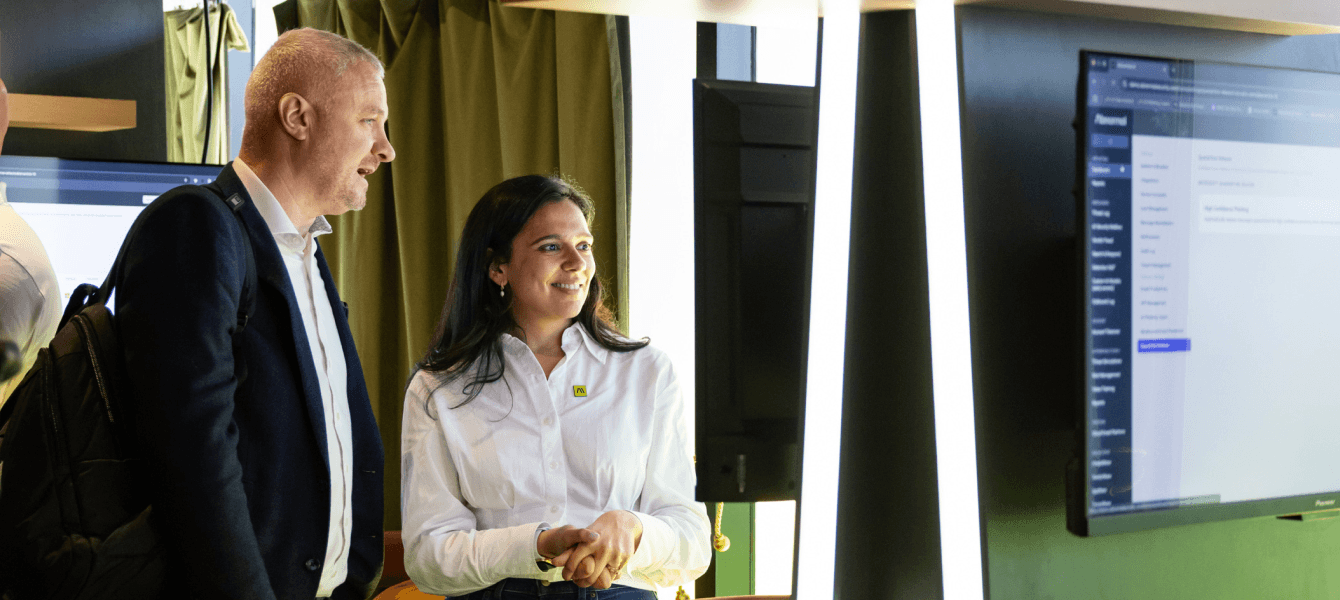
We raise the bar in our work, our feedback, and our outcomes. We celebrate wins, then look for what’s next.

We’re not for everyone
You might not thrive here if…
01
You need rigid rules instead of flexible frameworks
We give you frameworks and trust, not a rulebook for every decision. If you need a defined process before you can move, the open-endedness here will wear on you.
You need rigid rules instead of flexible frameworks
We give you frameworks and trust, not a rulebook for every decision. If you need a defined process before you can move, the open-endedness here will wear on you.
Our People
Hear from some of our team, in their own words.
We're right in the middle of one of the most consequential technical shifts of our generation, and we're building something that actually matters. That combination doesn't come around often, and I'm very aware of how fortunate it is to be here for it.
I never feel bad putting my reputation on the line to sell this product. What we say we do, we actually do. Not every company can say that.
I thought I was “AI native” when I got here, but Abnormal showed me what it really meant. It's an org-level shift of trust in what the capabilities of AI can be extended to when designed properly.
Being able to show him that Abnormal would have stopped that attack right from the start and saved him 48 hours of headache was really key.
When I realized AI wasn't just helping us code faster but actually helping us design and improve the product itself, it changed how I think about what it means to be a Product Manager here.
The problems get harder as the business grows. The stakes get higher. But so are the rewards that come with it.
A lot of people on the AI Transformation team aren't traditional software engineers. But with tools like Claude and Nora, they're creating and deploying real applications. Even as a product manager, I've been able to contribute code again, which is wild.
After six months here, I've never seen a single person at Abnormal say, “That is not my job.”
It's the rare place where my curiosity, my background, and this exact moment in history all converge. AI, cybersecurity, a culture that rewards experimentation over perfection. I couldn't have designed a better next chapter if I tried.
There's a deep sense of humility and shared ownership here. I get to scale these high-stakes solutions alongside brilliant people who are just as committed to the mission as I am.
The amount of ownership you are given is overwhelming at first, but it makes you rise to the occasion and builds a skill in you that would serve you well into the future.
With hypergrowth comes opportunity organically. If you raise your hand, you get to build.
There's probably no other company right now really integrating AI this much and taking the bet on it being a fairly transformational technology versus just a useful thing.
At Abnormal, my non-traditional path is seen as a real asset. People are genuinely curious. They recognize that those experiences have shaped how I show up today.
Showing Our Work
Transforming in Public
 Sales
SalesSDR Workbench
SDRs juggle inbound accounts, marketing qualified leads, whitespace prospecting, and closed-lost opportunities primed to re-engage, and each stream wants its own prioritization logic. Tim Davison built the SDR Workbench to pull all of those streams into one Cowork view, precompute the heavy AI scoring ahead of time, and track whether the prioritization actually generates pipeline.
Read More Product Development
Product Knowledge Base
The Product Knowledge Base’s newest version tackles getting humans and AI to work on the same documentation without getting in each other’s way. Andy Chen reworked how pages are structured, assigned, and organized so the AI can maintain dense, machine-readable detail while humans get something clean to supervise.
Read More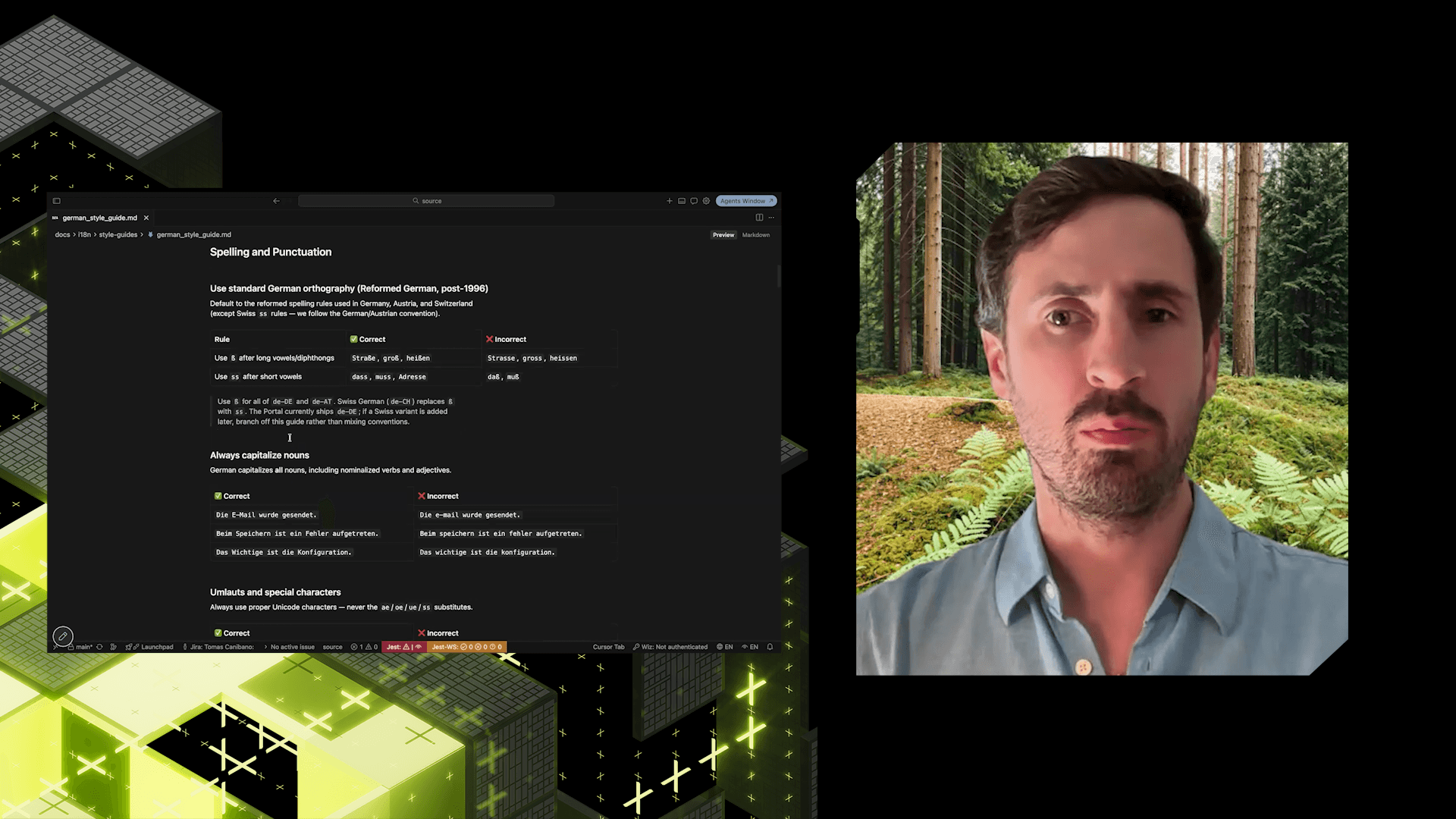 Product Development
Agent-Driven Portal Language Expansion
How a year of translation infrastructure, guardrails, and an agent named Nora let the portal expand into new languages, with fixes shipped straight from Slack.
Read More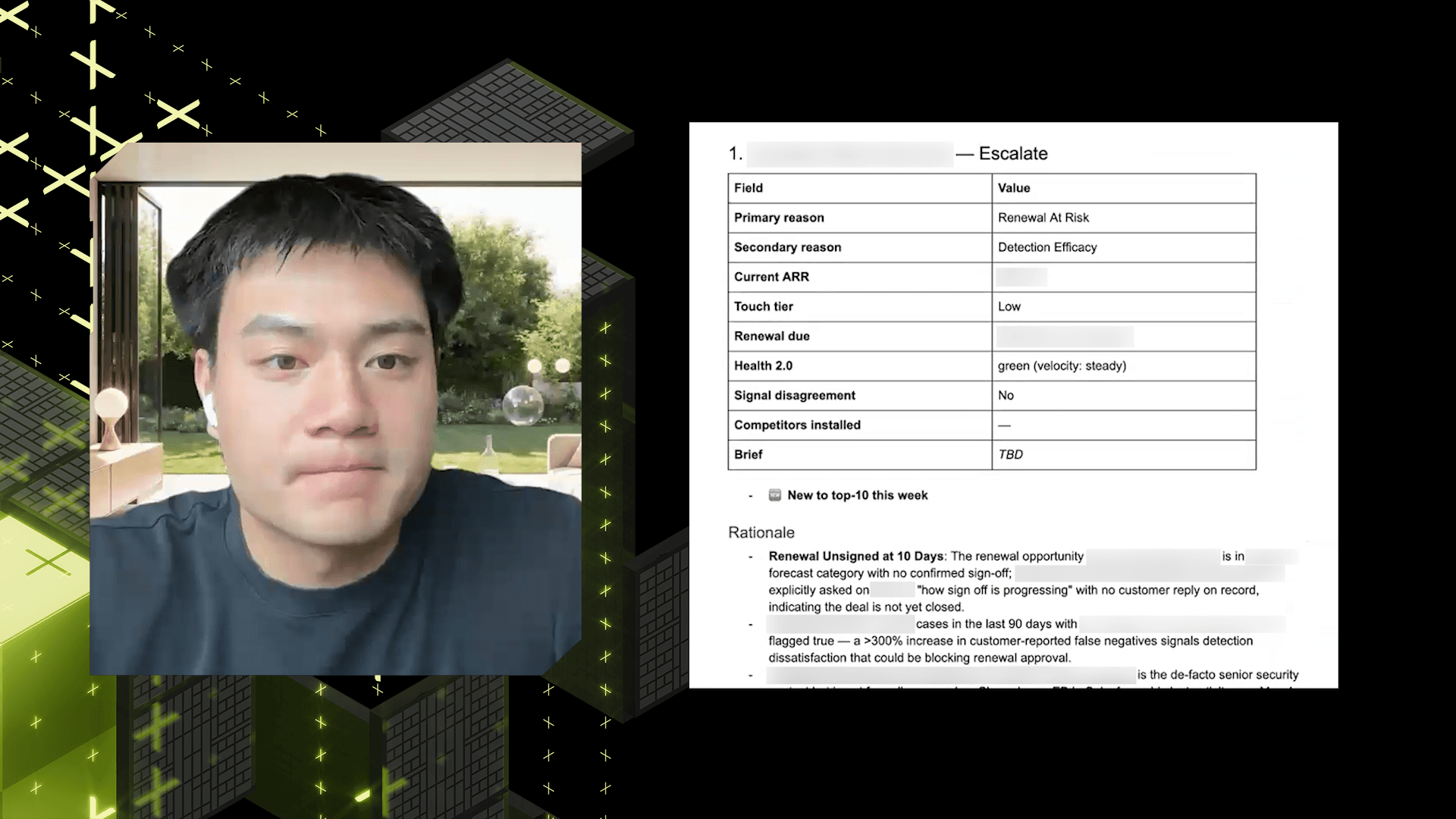 Customer Success
CSM Workbench
CSM Workbench, a weekly prioritization workflow for Customer Success. In this first episode, he shows how the system surfaces the top 10 accounts to focus on, then packages that weekly output into five tailored priorities delivered through email and a Google Doc.
Read More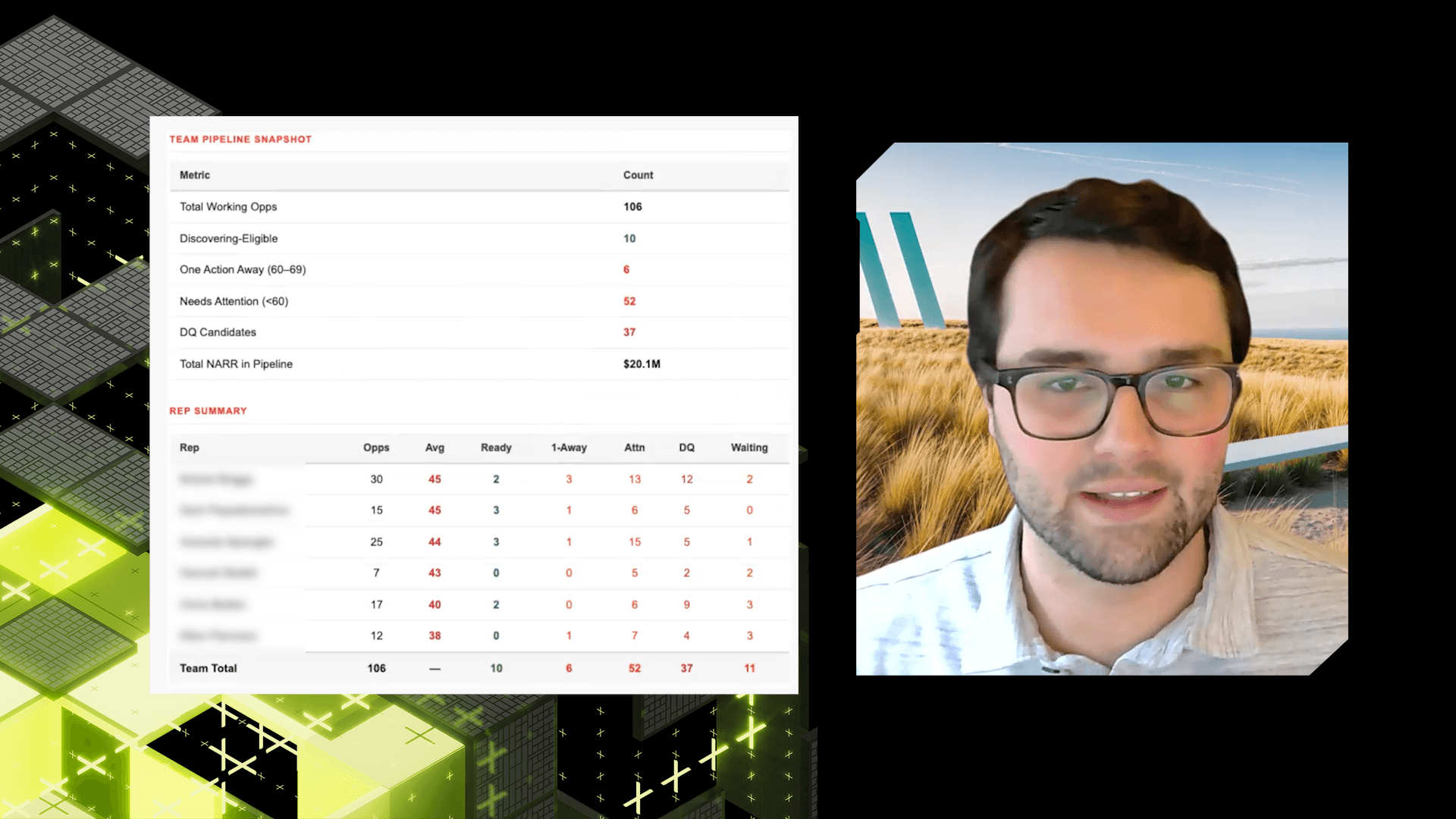 Sales
SalesStage IQ Opportunity Analysis
StageIQ tells SDRs exactly what is blocking each deal from advancing and gives managers a team-level rollup with specific coaching cards, replacing manual spreadsheets with prescriptive, deal-by-deal pipeline intelligence.
Read More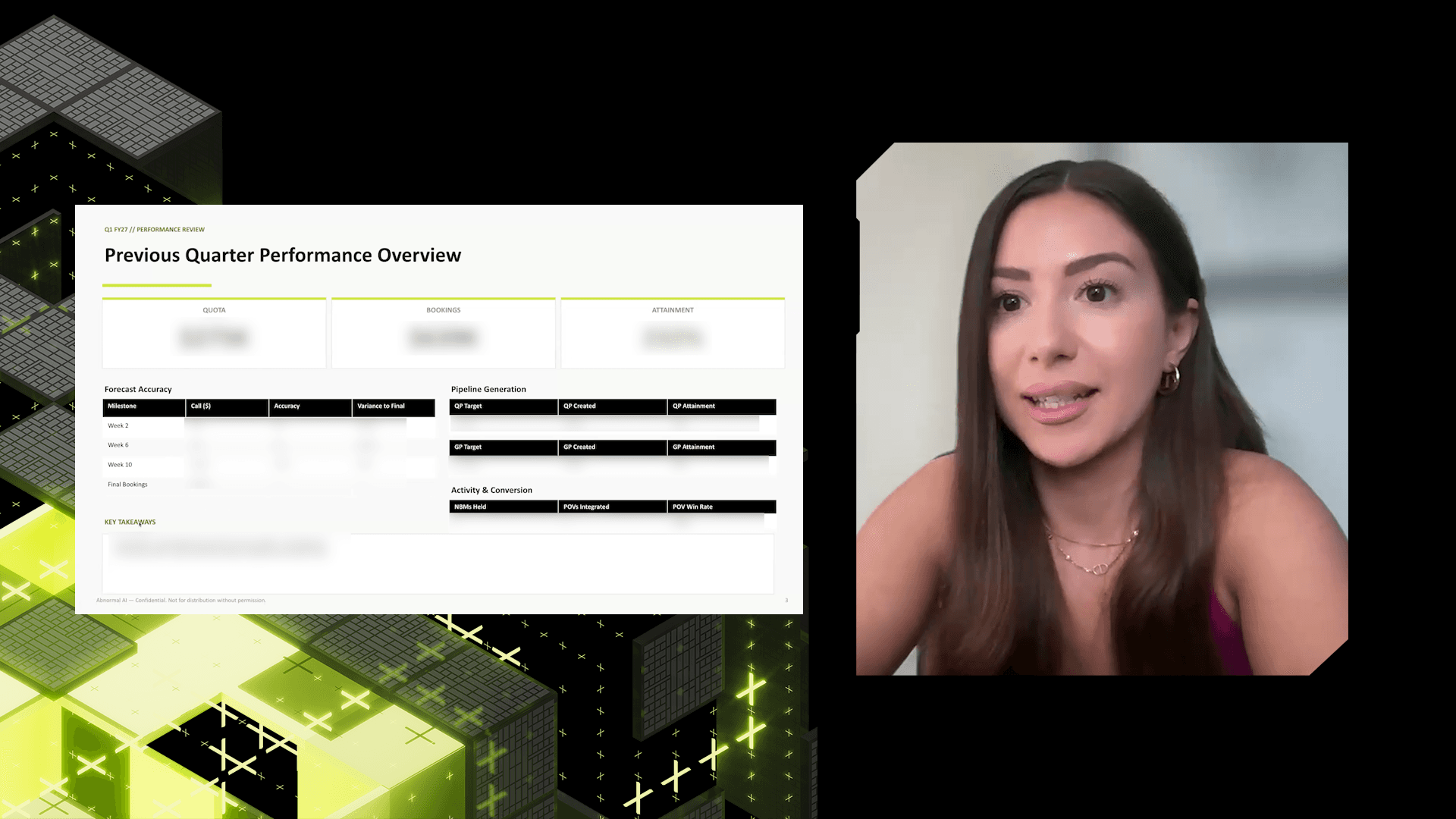 Sales
SalesQBR Deck Prep
The AE QBR skill pulls every Salesforce metric into the standardized QBR deck automatically, cutting six hours of rep data entry down to under thirty minutes.
Read More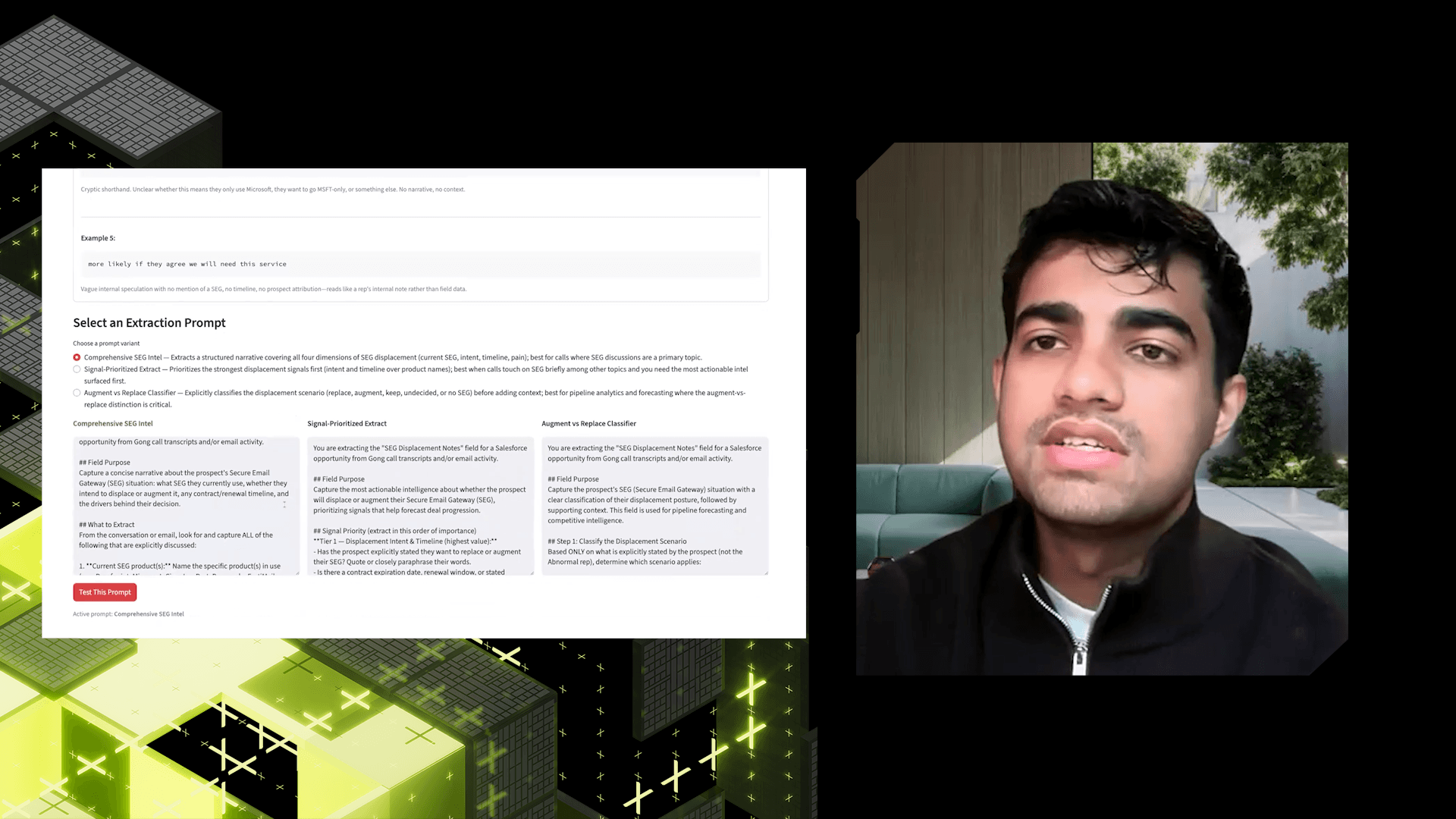 Sales
SalesSalesforce Enrichment Platform Part One
The Salesforce Enrichment Platform enables GTM teams to self-serve AI-powered field automation, reducing build time while improving CRM accuracy and downstream AI performance.
Read More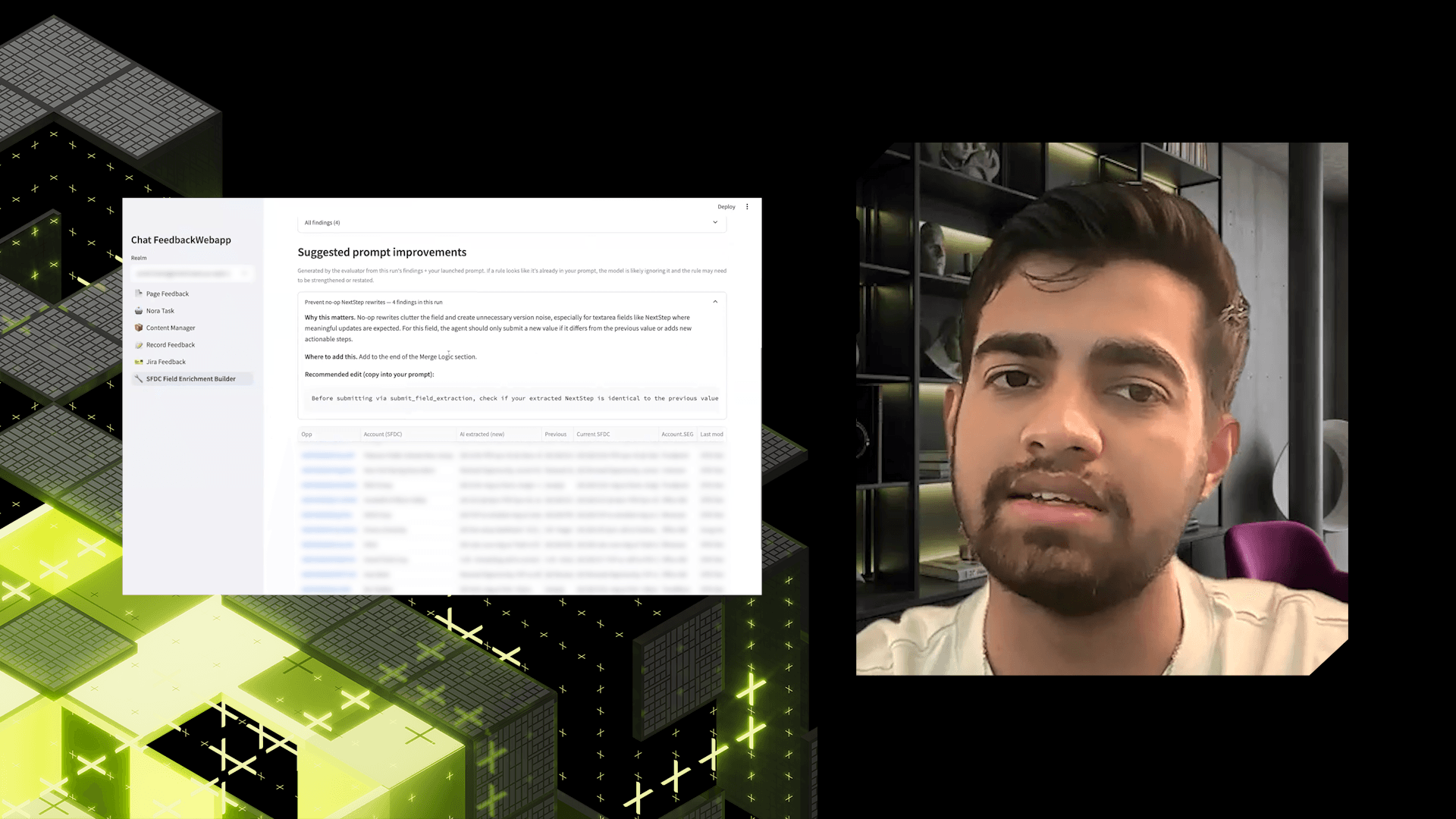 Sales
SalesSalesforce Enrichment Platform Part Two
The Salesforce Enrichment Platform now ships with live production evaluations. Haren Bhatia's latest update closes the visibility gap between launching an automation and trusting it in production, letting field operations sample real runs, see what is going right and wrong, and get concrete prompt improvements without engineering involvement.
Read More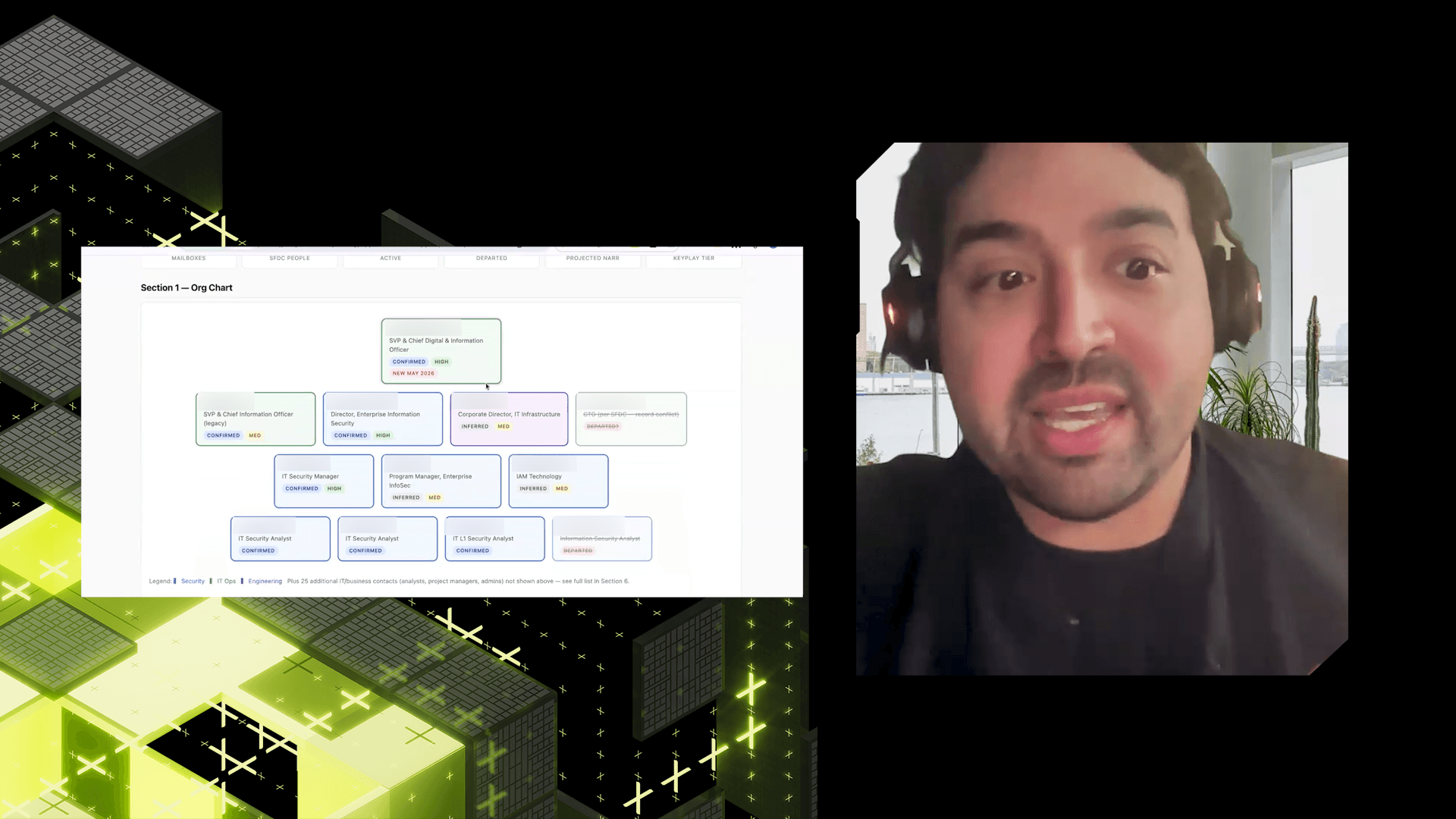 Sales
SalesMap The Room
JohnJosh Romaro (JJR), an SDR operations builder on the AI Transformation team, showed Demo Hour a vibecoded Cowork skill called Map the Room. The skill drafts an account org chart on demand and structures contacts by MEDDIC role so reps can see, in one place, who they know, who they don't, and where the gaps are.
Read More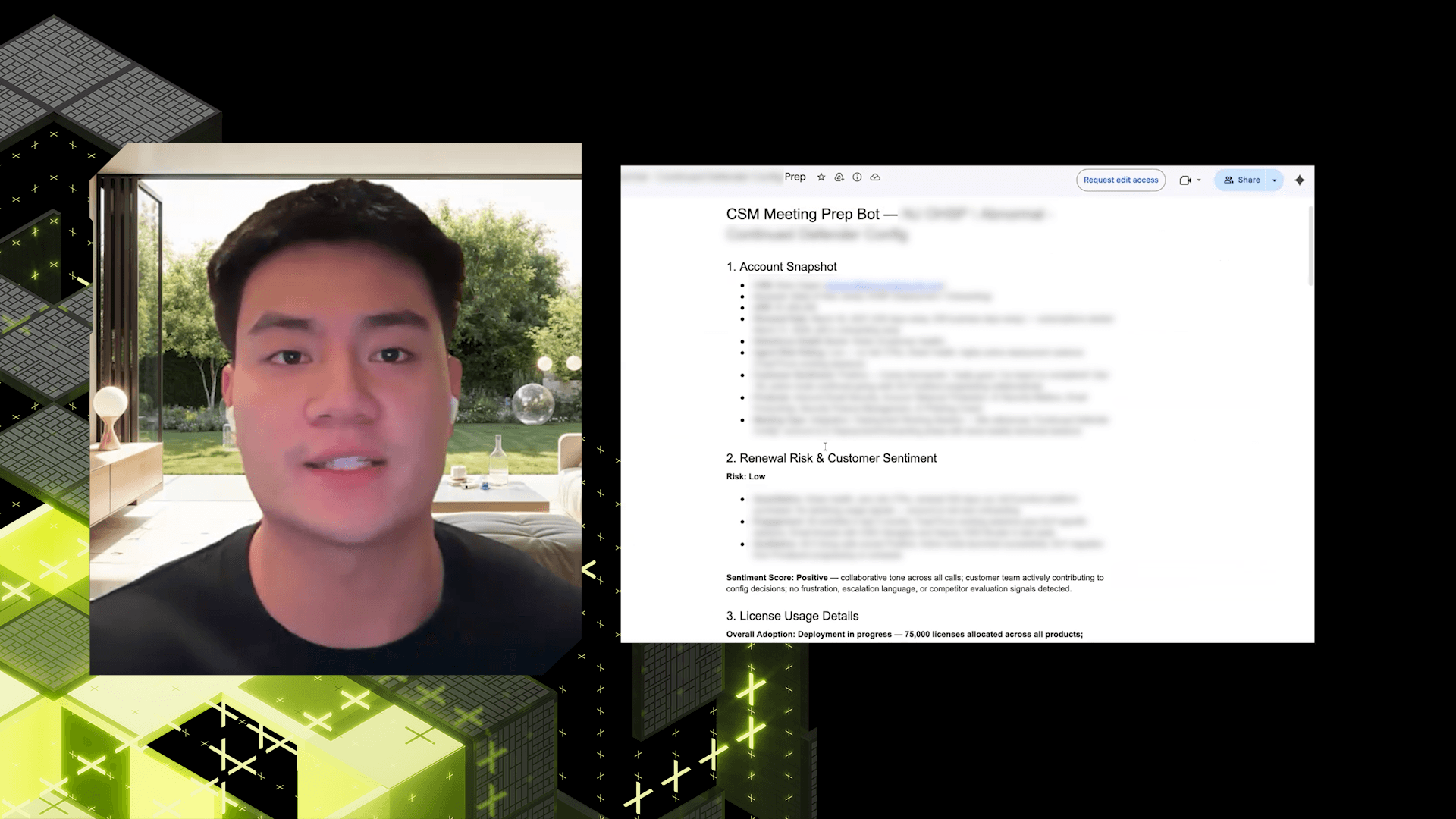 Customer Success
CSM Meeting Digest
Truong Nguyen, an AI product manager at Abnormal AI, shipped an update to the CSM Meeting Prep Bot that rebuilds it as a daily digest. Every Customer Success Manager now gets a single artifact two days before their meetings, with each upcoming call rolled into one embedded Google Doc instead of a stack of separate prep emails.
Read More Sales
SalesDeal Intelligence Layer
Zach Perkel built the Deal Intelligence Layer, an internal forecasting workflow that uses Claude Opus 4.6 to predict whether a deal will close in quarter. Instead of training a new ML model on handpicked features, Zach combines every piece of deal context the company has into a single prompt and lets the model decide what matters.
Read More Sales
SalesCSM Account Handover
Account handovers happen constantly in customer success, whether through promotions, team changes, or territory shifts. Timothy Davison built a tool in Nora Plan that pulls years of buried account history out of Gong, Salesforce, and other systems and turns it into clean, linkable handover briefs, making sure no context gets lost when an account changes hands.
Read MoreWhat Will You Build Here?
Explore open positions across Abnormal and across the globe. If you want to do the most important work of your career, start here.