Wichtige Erkenntnisse
Threat detection budgets are under pressure at exactly the moment attack surfaces keep expanding. Widespread SaaS adoption, cloud migration, and generative AI adoption have all multiplied the entry points attackers can exploit, while breach costs continue climbing year over year. Technology leaders can strengthen detection without growing their budgets by spending more deliberately, directing resources toward the controls, automation, and training that reduce risk without adding headcount or licensing sprawl.
Key Takeaways
- Cost-effective threat detection depends on spending deliberately rather than spending more, aiming resources at controls with the clearest return.
- Behavioral baseline monitoring and automation cut labor costs while shrinking the time attackers spend undetected inside a network.
- High-impact, low-cost controls such as multifactor authentication and email authentication protocols close common attack paths using tools most organizations already own.
- Training staff on technology-specific attack vectors and consolidating overlapping security tools both reduce cost while strengthening detection.
The Cost Challenge of Threat Detection in Technology
Threat detection costs consume a growing share of technology budgets as attack surfaces expand faster than security teams can track them. Each new SaaS application creates additional entry points for attackers, particularly across email, chat, and shared documents, and industry forecasts show enterprises adding hundreds of cloud services annually, a trend security researchers identify as a primary driver of breach exposure.
Many of those services get adopted by individual teams outside a formal procurement process, so security often learns about a new tool only after it is already handling sensitive data. That exposure grows further as organizations accelerate digital transformation, integrate generative AI, and migrate workloads to the cloud.
The cost of that exposure shows up directly in breach damages. In the United States, the average cost of a data breach has reached $10.22 million, according to IBM's 2025 Cost of a Data Breach Report, and that price tag keeps climbing even as post-pandemic budget scrutiny demands justification for every dollar spent and compliance mandates tighten.
Why Technology Organizations Cannot Afford to Cut Security Corners
Reducing security investment creates financial and reputational damage that outweighs any short-term savings, across three distinct cost categories:
- Intellectual Property Theft: AI-enabled cyberattacks steal source code and proprietary algorithms, and a single misconfigured SaaS integration can open the door to a supply chain attack.
- Regulatory Exposure: SOX and GDPR compound incident costs through mandatory disclosure requirements and steep penalties, though aligning to the NIST Cybersecurity Framework (NIST CSF) supports compliance while tying controls to business outcomes.
- Customer Trust: Enterprise buyers increasingly require security questionnaires and audit results before signing, and a public breach can stall pipeline deals for months.
A bigger budget doesn't fix any of these problems on its own. Closing these gaps takes deliberate moves like behavioral analytics and stack consolidation, not more spending.
Five Practical Strategies to Reduce Threat Detection Costs
Reducing threat detection costs means targeting the specific sources of wasted security spend, whether that's manual detection work or redundant tooling, so technology organizations can strengthen detection while holding budgets flat.
Behavioral Baseline Monitoring
Behavioral baseline monitoring establishes a clear picture of an organization's usual activity over a 30-day period. By collecting telemetry from platforms such as email and identity systems, security teams can detect anomalies that may signal a breach. AI and machine learning systems analyze large volumes of data quickly, identifying attack patterns that manual review might miss.
This approach is especially effective at uncovering sophisticated attacks that bypass traditional defenses. To implement it, organizations should:
- Set up automated data collection from critical systems.
- Use AI and machine learning tools to establish baseline behavior and flag deviations.
- Regularly review and adjust detection thresholds based on evolving threats.
Key performance indicators should focus on mean time to detect and false-positive rates. Tracking these metrics allows teams to continually refine the approach and keep protection reliable.
Automated Routine Threat Detection
Automating repetitive detection tasks reduces labor costs and shrinks attacker dwell time, freeing security teams to focus limited hours on high-value investigations. AI-powered platforms combine analytics with orchestration playbooks to manage alert volumes that exceed what any human team can review manually.
Start by automating time-intensive, low-value tasks such as phishing triage, mailbox cleanup, and indicator-of-compromise correlation across SIEM, EDR, and cloud environments, then add detection for credential stuffing, password spraying, and continuous vulnerability scanning tied to automated patch deployment. This formula estimates the savings: ROI = (analyst hours saved x fully loaded hourly rate) minus the annual cost of the automation tool.
Consider an analyst who arrives each morning to a queue of overnight phishing reports flagged by employees across multiple time zones. Reviewing each one manually can consume the first two hours of a shift, but an automated workflow that correlates reports against known indicators and auto-closes clear false positives frees that analyst to spend the morning on the handful of reports that actually warrant a closer look.
High-Impact, Low-Cost Security Controls
Small, targeted changes to access and email hygiene deliver outsized protection without stretching a budget.
- Enforce company-wide multifactor authentication (MFA) across all systems.
- Harden email with Sender Policy Framework (SPF), DomainKeys Identified Mail (DKIM), and DMARC.
- Conduct systematic least-privilege access reviews every quarter.
- Disable dormant accounts, tighten API tokens, and remove excess admin rights.
- Deploy conditional access policies that block risky logins from unfamiliar locations or devices and require step-up authentication for sensitive applications.
Most major identity platforms include these controls in their base license, so activating them costs staff time rather than additional budget. Cloud security posture management tools that are already bundled into many identity or cloud provider subscriptions can also flag misconfigured storage buckets and overly permissive service accounts, two of the more common ways a SaaS-heavy environment quietly expands its own attack surface.
Security Awareness Training for Existing Staff
Employee training turns a workforce into a cost-effective detection network that identifies threats traditional tools miss. According to Verizon's 2025 DBIR, the human element is involved in approximately 60% of confirmed data breaches. That figure alone makes security awareness training one of the highest-impact investments available.
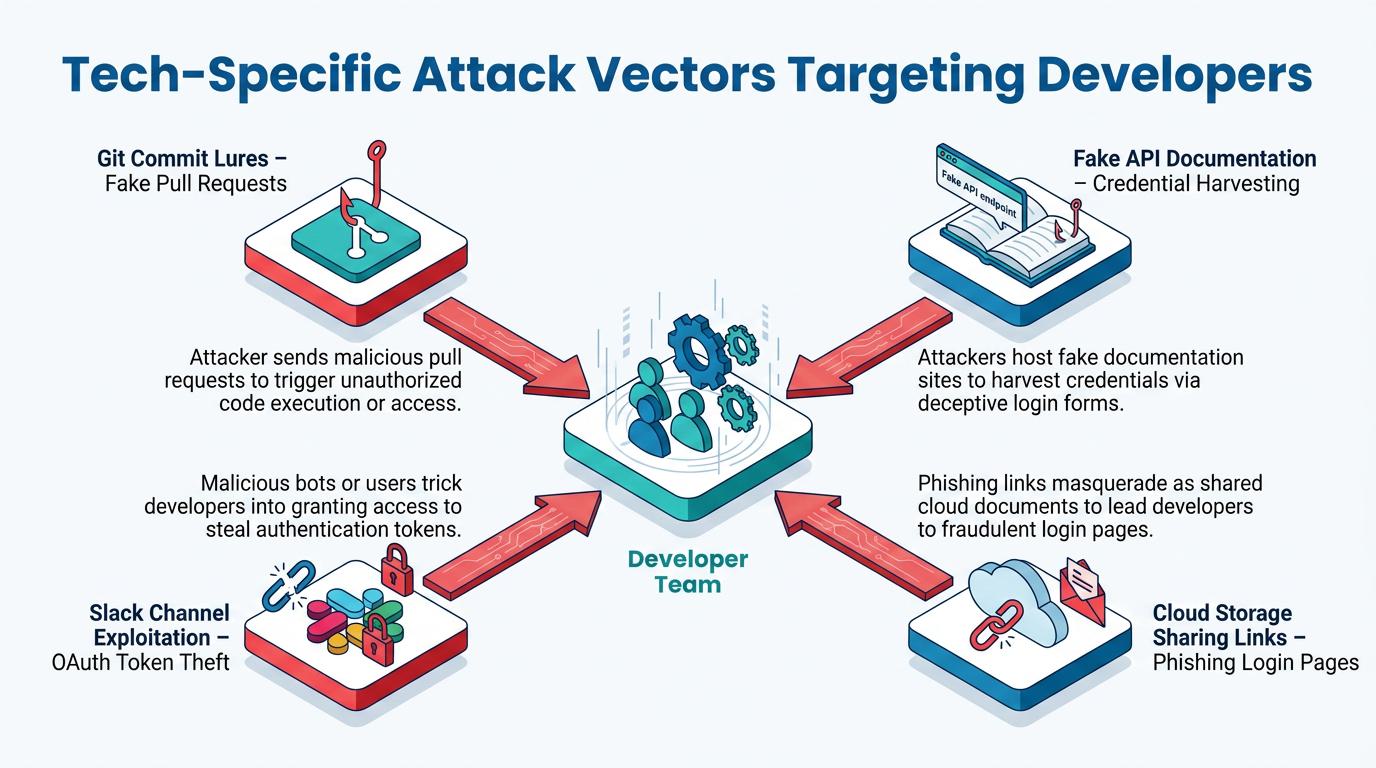
Technology organizations face attack vectors that generic training programs tend to miss:
- Git Commit Lures Targeting Developers: Attackers craft fake pull requests and commit notifications that appear to come from legitimate repositories, exploiting developers' trust in version-control systems. These spear-phishing attempts often bypass standard email filters.
- Slack Channel Exploitation for Token Theft: Criminals infiltrate public Slack workspaces or create convincing impostor channels to harvest OAuth tokens and API keys, relying on social engineering to trick team members.
- API Documentation Requests as Credential Harvesting: Fake API documentation sites and developer-portal clones are built to steal credentials and API keys from unsuspecting visitors.
- Cloud Storage Sharing Links Used for Credential Phishing: Attackers send fake shared-document notifications that mimic common cloud storage platforms, directing recipients to a lookalike login page that captures their credentials.
A strong training program addresses these tech-specific scenarios through quarterly simulations built around the platforms a given team actually uses, rather than generic phishing templates that reference tools no one on the team touches. Short, targeted refreshers reinforce concepts at the moments they matter most, while gamified leaderboards that reward rapid reporting double as an early signal of which teams need additional training.
Security Stack Consolidation
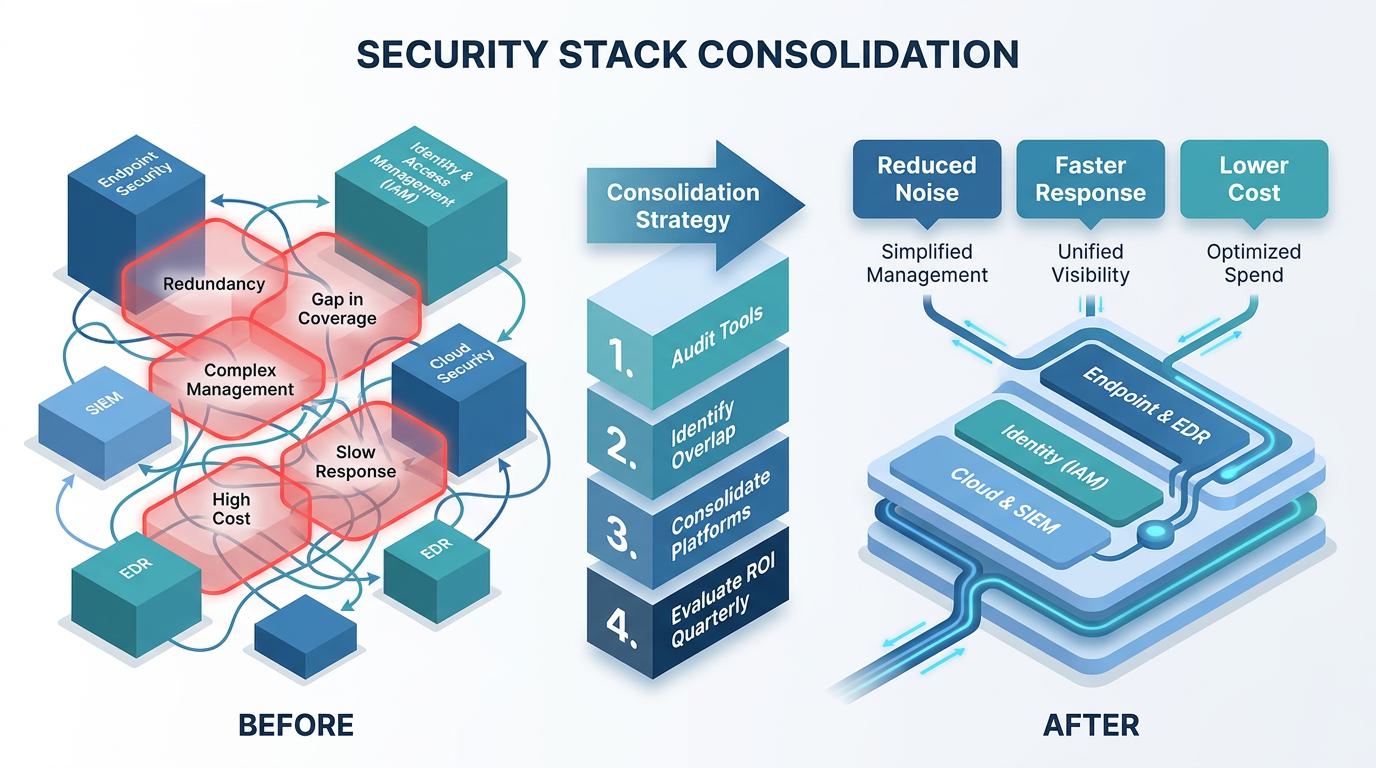
Trimming tool sprawl sharpens threat detection and stretches a budget further.
- Review every security tool and map it to the role it plays in stopping threats.
- Identify overlapping features, coverage gaps, and opportunities to simplify.
- Consolidate endpoint, identity, and cloud data into unified platforms to cut noise and speed response.
- Regularly evaluate feature overlap, integration quality, vendor strength, and return on investment.
A focused stack delivers stronger protection with less waste than a sprawling one ever will.
Efficiency Is the Real Security Advantage
Cost-effective threat detection depends on directing every dollar toward controls that measurably reduce risk: behavioral monitoring, automation, and disciplined tool consolidation, not simply more spending. Technology organizations that treat these strategies as an ongoing practice, rather than a one-time project, build detection programs that scale with their attack surface instead of falling behind it. The strongest security posture is the one a budget can actually sustain.
