Key Insights
Threat detection in transportation has to keep pace with sophisticated attackers targeting transit agencies, ports, and supply chain operators, even as security teams manage overlapping regulations across maritime, aviation, and surface systems with limited resources. In December 2024, a ransomware attack on Pittsburgh Regional Transit caused temporary light rail delays and disabled parts of its Customer Service Center, a reminder of how quickly a single intrusion can spill into physical operations.
Transportation networks are attractive targets because they are distributed and interdependent. A compromise in one mode, such as maritime shipping, can ripple into rail and trucking operations through shared digital platforms. Cost-effective detection strategies help agencies close these gaps without duplicating effort across every regulatory mandate.
Key Takeaways
- Transportation threat detection has to account for how deeply interconnected maritime, aviation, and surface networks are, since a compromise in one mode can cascade into others.
- Foreign-made port equipment and logistics platforms can introduce hidden security gaps that attackers exploit alongside email and identity compromises.
- Passive monitoring lets transportation teams observe operational technology traffic and spot anomalies without risking the downtime that active scanning can cause.
- Coordinating compliance and vendor risk programs across agencies reduces duplicated work and closes the gaps that fragmented oversight leaves behind.
Why Threat Detection in Transportation Matters
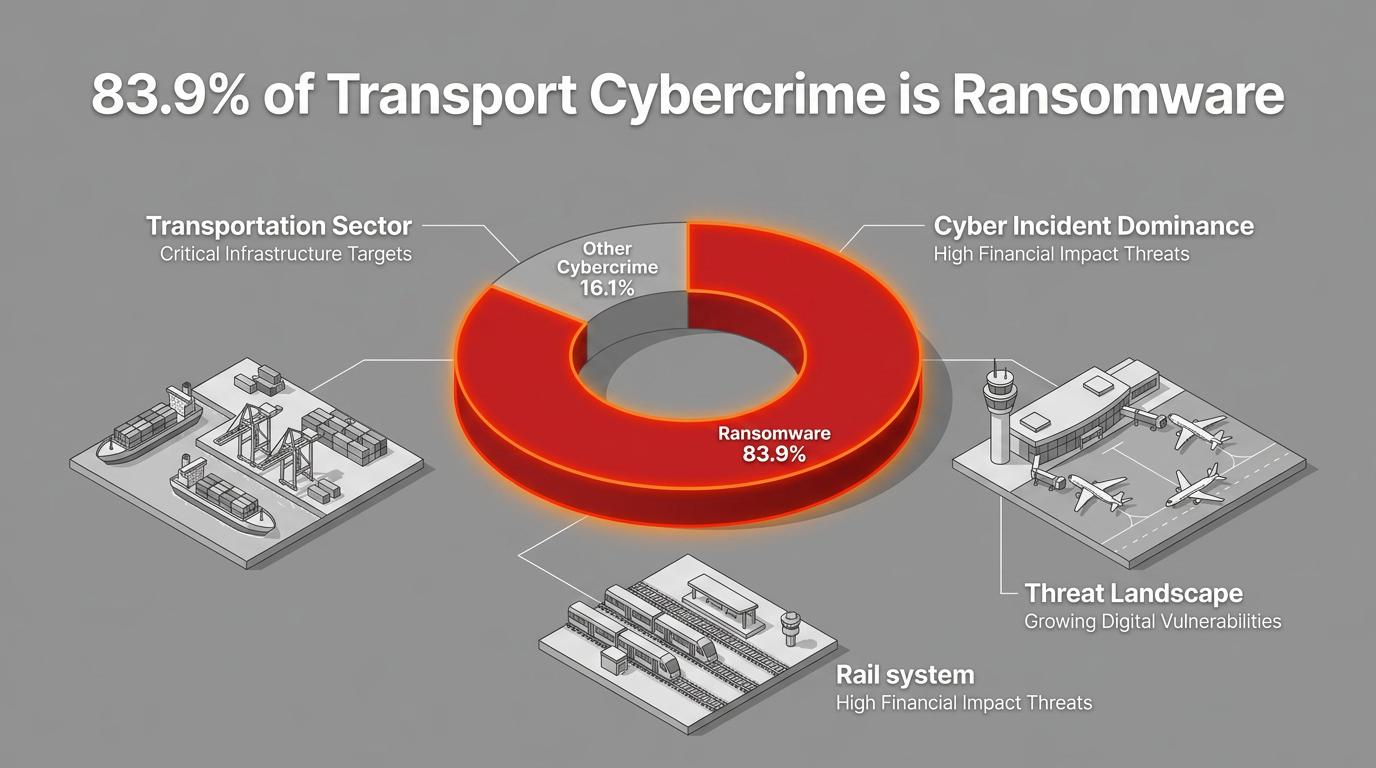
Cyber incidents in this sector can disrupt passenger safety, supply chain continuity, and critical infrastructure operations all at once. According to ENISA's Threat Landscape report, ransomware accounted for 83.9% of cybercrime incidents against the transport sector. When ransomware attacks hit port systems or phishing attacks compromise air traffic networks, operations can halt across entire regions.
The sector's critical infrastructure designation puts it on track for mandatory incident reporting once the Cybersecurity and Infrastructure Security Agency (CISA) finalizes rules under the Cyber Incident Reporting for Critical Infrastructure Act (CIRCIA). Attacks against industrial control systems and Supervisory Control and Data Acquisition (SCADA) networks managing operational processes can create physical consequences that extend beyond traditional IT disruptions.
What Makes Transportation Infrastructure a Strategic Target
Transportation infrastructure attracts sophisticated attackers because global logistics depends on distributed, interdependent systems. Transportation networks also span vast geographies, unlike centralized enterprises, and that geographic spread multiplies the entry points cybercriminals can target.
Critical Infrastructure Dependencies
Critical infrastructure dependencies heighten risk across transportation industries because each mode relies on shared digital and operational systems:
- Maritime to Surface: Maritime shipping connects with rail and trucking through digital platforms, so a cyberattack can disrupt entire supply chains.
- Ports: A ransomware incident can freeze customs and cargo handling, where pausing operations for incident response is rarely practical.
- Aviation and Surface Transportation: Passenger communications, dispatch workflows, and vehicle movement depend on connected systems that often exchange data with external partners.
That interdependence turns localized compromises into broader continuity risks. For CISOs, cost-effective detection starts with identifying where one mode of transport depends on another, then prioritizing monitoring around those junctions instead of treating each environment as isolated.
Foreign Technology Risks
Foreign technology dependencies can introduce security gaps into port and logistics environments when platforms or equipment connect to operational workflows:
- LOGINK Restrictions: Congress now prohibits ports receiving federal grant funding from using LOGINK, the logistics data platform administered by China's Ministry of Transport.
- Crane Hardware Risks: A joint congressional investigation found unauthorized cellular modems on Chinese-manufactured ship-to-shore cranes bound for U.S. ports.
These risks matter because port equipment, logistics platforms, and email workflows often sit near the same operational decision chain. Threat actors can pivot from email compromises into operational systems, using malware and lateral movement to remain undetected. Transportation teams can reduce exposure by tracking foreign technology dependencies as part of asset discovery and vendor risk assessment.
Regulatory Pressure
Regulatory pressure adds cost and complexity to transportation threat detection when teams interpret agency mandates separately. Operators face mandates from the Coast Guard, Transportation Security Administration (TSA), Federal Aviation Administration (FAA), and CISA, often with different evidence requirements and review cycles. The practical risk is fragmentation, since separate interpretations lead teams to deploy controls mode by mode, producing inconsistent settings and gaps attackers exploit.
Misconfigurations often enable phishing or social engineering attacks, especially when technical ownership and compliance ownership diverge. For CISOs, the first challenge is identifying where regulatory interpretations create detection gaps before those gaps harden into operating practice.
Why Traditional Detection Methods Fall Short in Transportation Environments
Traditional threat detection approaches often struggle with transportation's operational constraints because uptime and safety requirements limit intrusive monitoring. Traditional email security strategies may not address every risk in environments that combine cloud collaboration, operational technology (OT), and safety-critical systems. Signature-based detection was never designed to catch zero-day attacks targeting critical infrastructure.
These operational constraints compound in several ways:
- Vast Monitoring Scope: Transportation companies monitor vessel tracking systems, air traffic networks, rail signaling, and cargo equipment across vast areas.
- Alert Fatigue: Legacy secure email gateways (SEGs) often generate excessive false positives that create alert fatigue.
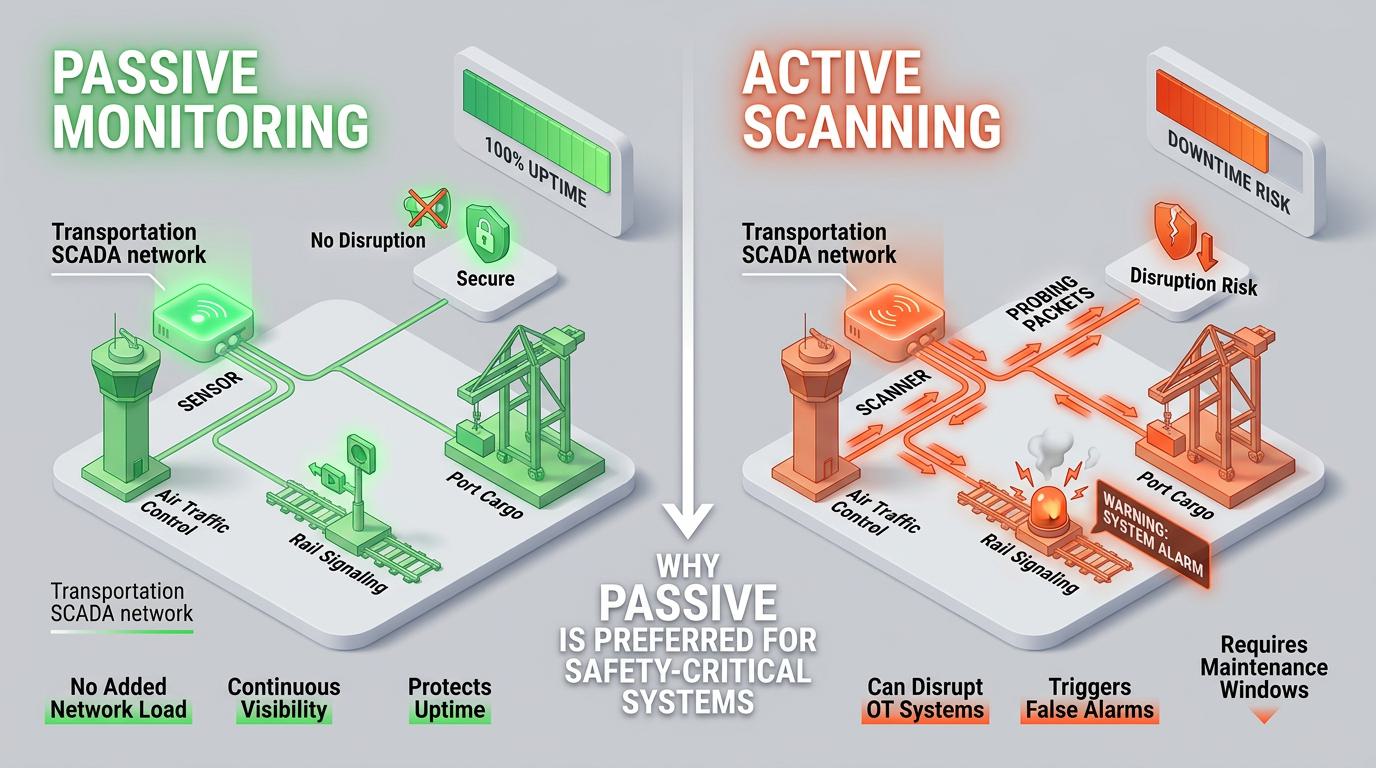
- Active Scanning Risk: Active scanning can disrupt operational processes or trigger false alarms in safety-critical systems that prioritize reliability over security.
Closing these gaps requires strategies purpose-built for transportation's mix of regulatory requirements and operational constraints, rather than detection tools designed for conventional IT environments.
Adopt Government Cybersecurity Frameworks for Unified Compliance
Unified cybersecurity frameworks help transportation CISOs design a common control model without weakening agency-specific obligations. For organizations operating across multiple modes of transport, the design goal is consistency across three elements:
- Shared outcomes across every mode of transport.
- Shared control language that all teams and agencies recognize.
- Clear executive oversight of the unified program.
The NIST Cybersecurity Framework (CSF) 2.0 offers a path already used across sectors, since it adds a Govern function that treats cybersecurity as an enterprise risk senior leaders should weigh alongside finance and reputation. By establishing a single cybersecurity coordinator role, transit operators can adapt this framework across maritime, aviation, and surface obligations while preserving the details each agency requires.
This design approach turns compliance into a strategic advantage. Applying existing investments, such as email threat protection and account takeover defense, across a shared control model reduces inconsistent implementation, controls cost, and strengthens defenses against advanced threats.
Implement Passive Operational Technology Network Monitoring
Passive OT monitoring gives transportation teams visibility into operational systems without introducing unnecessary downtime risk, and it typically costs less than active scanning tools that require additional network hardware and scheduled disruption windows. Environments such as air traffic control, rail signaling, and port cargo systems operate around the clock, leaving little room for intrusive testing. NIST's OT security guidance distinguishes passive monitoring, which observes network traffic without adding load, from active scanning, which probes systems by generating additional traffic. That distinction matters because added network load can disrupt the safety-critical operations transportation teams depend on.
Passive monitoring addresses the challenge by observing traffic silently. Sensors decode protocols and capture SCADA communications without injecting packets, which supports asset discovery while protecting uptime. Once sensors establish normal operating patterns, AI-based tools can flag anomalies like unusual port-to-port traffic or unauthorized access attempts.
When integrated into a Security Information and Event Management (SIEM) platform, passive telemetry enriches enterprise visibility by correlating OT signals with identity and email threats. For CISOs, this unified perspective speeds detection of lateral movement while preserving operational safety, so threats surface before they escalate into outages in mission-critical environments.
Establish Coordinated Supply Chain Risk Assessment Programs
Coordinated supply chain risk assessment programs help transportation organizations standardize vendor oversight across interconnected logistics networks. Transportation networks depend on vendors, from logistics software providers to port operators. That interconnectedness magnifies risk: a compromise at a single vendor can cascade across maritime, aviation, and surface systems. Without standardized oversight, vendor assessments become inconsistent, costly, and prone to gaps.
Standardized supply chain risk assessments address these challenges directly. NIST guidance helps standardize evaluations across vendors so each partner is assessed against consistent security criteria. Embedding these frameworks into procurement workflows creates a centralized process that reduces redundant evaluations and accelerates contracting.
Continuous monitoring closes the loop across three fronts:
- Exposure Tracking: Monitoring tracks exposures such as leaked credentials or unpatched systems.
- Contractual Accountability: Integrating these insights into vendor contracts enforces accountability across the vendor network.
- Cost and Visibility: Coordinated programs reduce assessment costs and give teams a clearer view of third-party risk.
That visibility helps protect against cascading attacks across critical transportation infrastructure.
Deploy AI-Enhanced Detection for Maritime Behavioral Analysis
Maritime operations generate massive amounts of telemetry, from vessel tracking to cargo system logs, and traditional monitoring struggles to keep pace with that volume without adding headcount. State-sponsored adversaries exploit that gap, using stealthy tactics that blend into the noise.
Behavioral analysis models address that gap by learning normal communication patterns across port operations, cargo workflows, and vessel systems, then flagging anomalies such as irregular logins, unusual cargo transactions, or sudden spikes in data transfer. This supports early detection of business email compromise (BEC), insider misuse, and spear-phishing campaigns tailored to maritime targets. According to the FBI's 2025 IC3 report, business email compromise drove $3.047 billion in reported losses that year.
In general email security, deep learning has been shown to reduce false positives by correlating signals across communication systems, which keeps investigation costs down by directing analyst time toward confirmed risks instead of noise. Applying that same approach to maritime telemetry is a reasonable extension of the pattern, not yet a proven, sector-specific result, though it points toward stronger, more cost-efficient defenses against the nation-state actors probing this gap.
Create Cross-Agency Regulatory Coordination Programs
Cross-agency regulatory coordination helps transportation companies manage reporting, audit evidence, and regulator communication without duplicating work. After leaders define a common control model, compliance teams still need execution routines that keep reviews moving. The work centers on shared calendars, reusable evidence, defined escalation paths, and accountable control owners. This tactical layer reduces last-minute evidence collection and helps security teams answer regulator requests with consistent documentation.
Teams can use shared requirement maps to organize execution artifacts. Master calendars align submission dates across agencies, while evidence libraries keep policy, detection, response, and training documentation ready for review. For example, aligning email security controls with TSA requirements can also inform Coast Guard compliance.
Practical coordination programs often include these components:
- Requirement Mapping: Teams align shared controls across maritime, aviation, surface, and critical infrastructure mandates.
- Evidence Libraries: Compliance teams maintain reusable policy, detection, response, and training documentation for audits.
- Reporting Workflows: Security leaders define escalation paths for regulator notifications, legal review, and executive updates.
- Control Ownership: Each control has an accountable owner who can validate implementation and provide supporting evidence.
Automated compliance tools can improve efficiency further by generating reports and flagging overlapping tasks across agencies. For CISOs, coordinated programs reduce administrative costs, accelerate audit readiness, and support consistent protections across transportation environments. Instead of diverting resources into redundant compliance work, security teams can focus on safeguarding operations against phishing, social engineering, and advanced persistent threats.
Turning Fragmented Compliance Into Coordinated Defense
Transportation security teams face a narrower margin for error than most industries, since a single missed alert can disrupt infrastructure people depend on daily. These strategies share one thread: treat maritime, aviation, and surface systems as one interconnected environment, since a dollar spent at their connection points buys more coverage than the same dollar spent on any single mode. Agencies that build detection around where systems actually connect, not where org charts draw boundaries, are the ones that close the gaps attackers rely on.